 Products
 Circulars
 Container
 Food packaging
 Wood
Wood Folding
 Fixation
 Padding
 Physical and chemical
 ADR
ADR Control
 Sectors
 Automotive/Railways industry
 Electric industry
 Solar industry
 Maintenance industry
 Health industry
 Aeronautical/Heavy machinery industry
 Moving/Storage industry
 Exhibitions/Trade fairs industry
 Services
 Sustainable packaging
 Optimization of packaging
 360 recycling
 Blog
Blog Contact
Maritime transport: Practical guide to shipment of goods
Maritime transport is the backbone of international trade. In fact, in Spain it accounts for around 80% of imports and approximately 50% of exports.
Complying with the specifications of maritime shipments is crucial to ensure that our merchandise arrives at its destination in a timely manner. Therefore, if your company is involved in exporting or is considering doing so, it is important to understand the factors that affect ocean shipments and what types of packaging are most suitable for this type of transport.
Factors that condition maritime transport
One of the advantages of maritime transport is its versatility, since it adapts to any type of cargo. However, there are issues that must be taken into account when preparing our shipments:

Type of container:
Most of the international transport of dry goods travels by container. Depending on the cargo, a type of container will be chosen and also whether it will occupy a full container (Full Container Load or FCL) or share space with goods from other exporters (Less Than Container or LCL).
Sudden abrupt movement:
Containers may experience sudden movements during handling and due to sea conditions, which may affect the stability of the cargo.
Temperature:
Temperature changes may occur during voyages, affecting the cargo.
Humidity and salinity:
Sea salt and humidity can cause the cargo to rust.
How to protect the goods for maritime transport?
Considering the peculiarities of maritime transport, it is time to analyze which packaging will help us to avoid damage or loss, and ensure a correct transport of the cargo from its origin to its destination.
-
Fastening systems
For sensitive cargo, such as electronic equipment or chemical products, it is important to use securing systems to immobilize and secure the cargo inside the container.
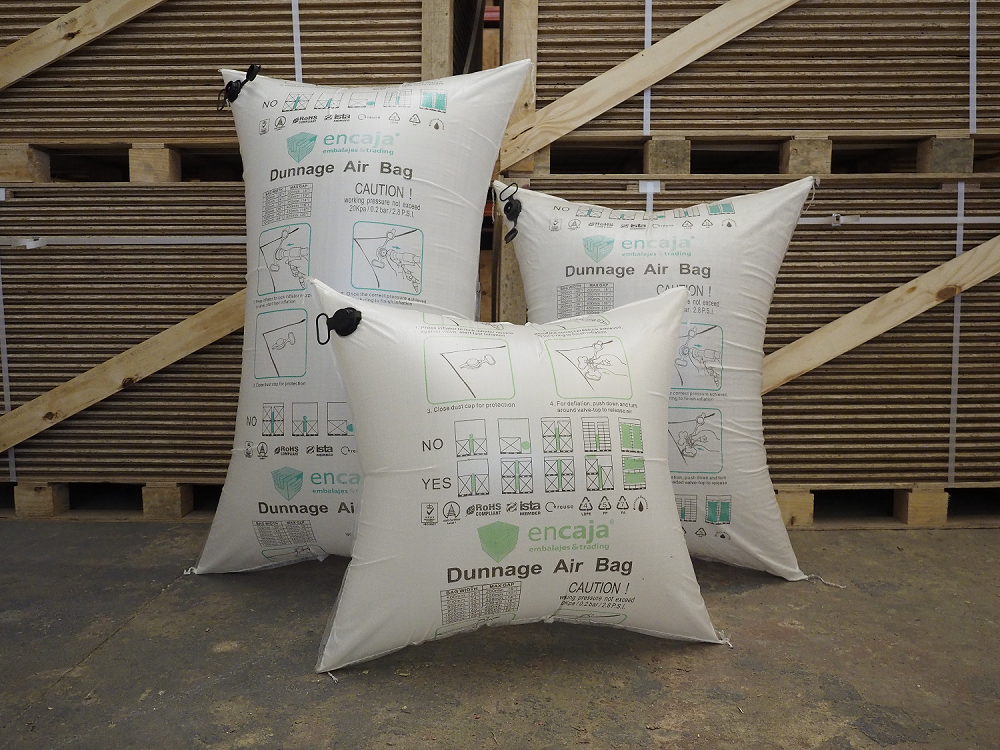
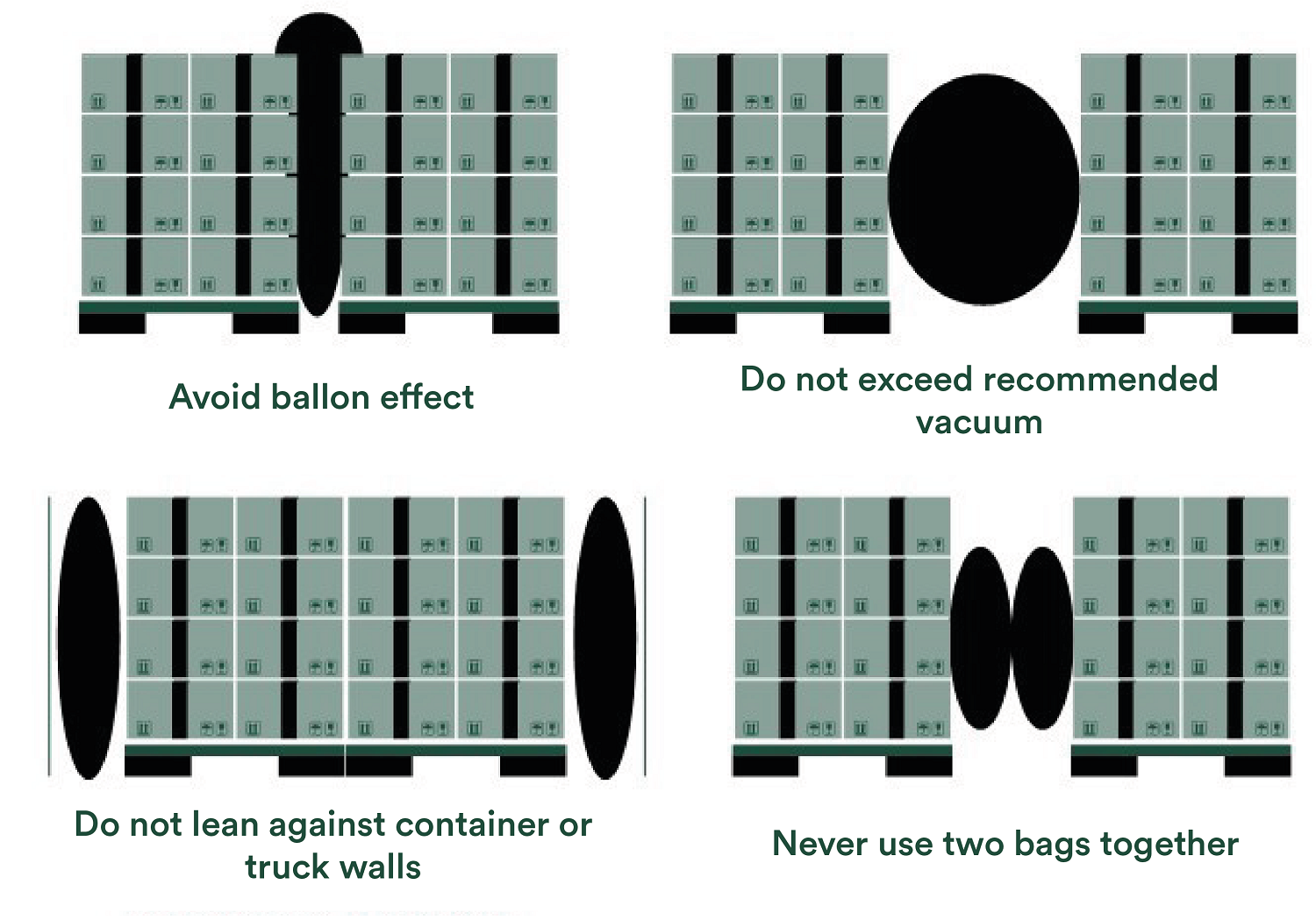
In this regard, airbags are one of the most effective devices. These airbags are placed between the packages and prevent their movement. They are reusable and adapt to the irregularities of the cargo.


2. Insulating systems
For goods sensitive to humidity and salinity, such as metal parts without surface treatment or electrical equipment, insulating systems can be used to keep the atmosphere as neutral as possible during transport.
Among the isothermal insulating systems, heat-sealable bags stand out. They are a product widely used in packaging to prevent corrosion, especially in the case of metal and electronic devices. As a complement, dehydration systems such as desiccant salts are used to absorb moisture from the internal air volume. Moisture detectors will indicate whether the desiccant salts have reached their absorption capacity limit.

We also manufacture customized heat sealable bags; you can see the video here:
Shrink-wrapped plastic is used for large-volume cargo or machinery. This type of plastic creates a protective film against adverse weather conditions (UV rays, rain, wind).

3. Phytosanitary certification and sealing ISPM-15
In international transport, all packaging with wood as raw material must bear the corresponding marking, complying with the International Standard on Phytosanitary Measures ISPM-15. This regulation serves to prevent the spread of pests.
However, the certificate will depend on the geographical location to which the cargo is destined and whether it is required by the plant protection agency of the destination country. For example, for exports to European Union countries the standard is not mandatory, but in certain cases they may request the ISPM-15 marking.
Among wooden packaging, a very widespread solution for maritime shipments is the Clipping Crate ®. This is a reusable, economical, resistant box with an innovative design. It is equipped with a closing system using galvanized zinc clips or staples, which provide strength and flexibility. In this way, the box can be assembled and disassembled by a single person without the use of tools. A very useful system that facilitates customs inspection.

If you have any questions about packaging and maritime transport of goods, do not hesitate to contact us.