 Products
 Circulars
 Container
 Food packaging
 Wood
Wood Folding
 Fixation
 Padding
 Physical and chemical
 ADR
ADR Control
 Sectors
 Automotive/Railways industry
 Electric industry
 Solar industry
 Maintenance industry
 Health industry
 Aeronautical/Heavy machinery industry
 Moving/Storage industry
 Exhibitions/Trade fairs industry
 Services
 Sustainable packaging
 Optimization of packaging
 360 recycling
 Blog
Blog Contact
Battery packaging, essentials and main factors to be taken into account
In our more than 80 years, 360 Eco Packaging has manufactured many certified packaging for dangerous goods and explosives, so we want to mention that we are members of the Subcommittee CTN 192 SC 03 (UNE/ISO) in the development of a new regulation in the field of transport of dangerous goods with AENOR and the Ministry of Industry (ISO 16495 development).
In this post, we will talk about the packaging and batteries shipping, including those coming from the automotive sector as one of the most complex in the field of transport and logistics.
To begin with, we must take into account the type of item to be transported; in this case, batteries classified as hazardous under current regulations. Therefore, as a normative and legal basis we must take among others the ADR code that identifies this type of element in category 2, class 9.
For the different types of batteries, this ADR code classifies them according to their construction material, for example:
- Lithium-ion battery: UN No. 3480
- Lithium metal battery: UN No 3090
- Nickel-metal hydride battery: UN No. 3496
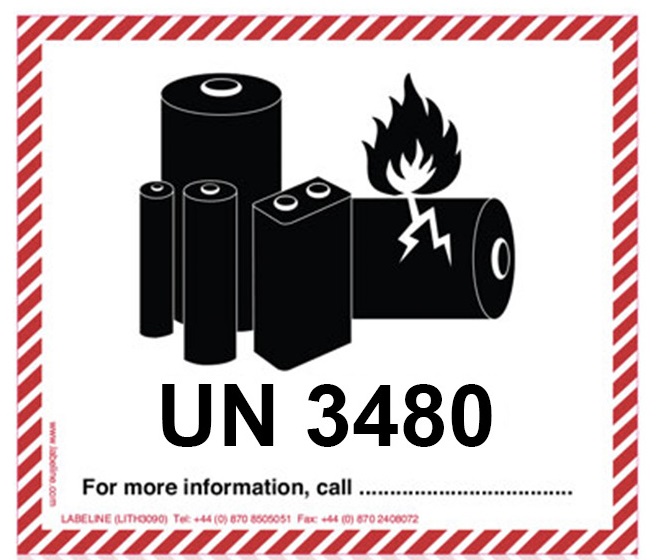
In this link, you can consult all the information.
Once the type of battery to be protected has been defined, the ADR code defines specific instructions for each type of battery depending on different parameters such as: the point in its life cycle, the degree of deterioration, whether it is installed in equipment, etc.
After this short introduction, we will try to answer the main questions that may arise:
What are ADR boxes or certified packaging for battery transport?
The certified packaging for the transport of batteries or ADR crates for batteries is a type of packaging specifically designed and developed for this purpose.
These crates come with the product from the factory to the recycling plant. In other words, we offer the solution for the entire circuit from the point of view of savings, since the cost is the minimum.
Therefore, the packaging not only serves as a mere means of protection, but is positioned as a key link in the value chain that makes up the life cycle of the batteries.
Why is the transport of batteries classified as dangerous?
Mainly, because due to their construction type, this type of batteries are sensitive to impacts and sudden temperature changes, and there is a risk of internal component leakage, explosion or fire due to high temperature, among others.
Therefore, it is essential to minimize these risks by designing a packaging that contains and minimizes them.
Can damaged batteries be transported?
Yes, as we mentioned at the beginning of this post, there is a specific regulation for these issues.
In this case, it is a robust packaging capable of containing and retaining liquid spills, thus avoiding explosions, perforations, deterioration or other types of incidents capable of damaging not only the product but also causing damage to the population or the environment.
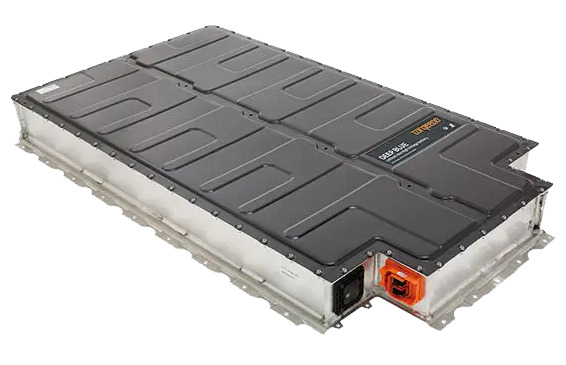
As a conclusion, storing, transporting and shipping a battery correctly ensures that the risks involved are eliminated or minimized.
Keeping the battery at a suitable temperature is essential to avoid spontaneous combustion. These types of batteries are very sensitive to humidity, high and low temperatures. In addition to the main packaging, there are temperature and humidity detectors capable of monitoring these parameters.
Finally, it must be taken into account that the transport agency with which the service is carried out must be certified for this type of shipment. They must be qualified for the transport of dangerous goods and comply with the established regulations.