Tag Archives: Transport

Desiccant salts, absorption capacity and normalization

Dehydrating or Desiccant salts, they are used more and more frequently for the packaging of cargoes, especially in maritime transports, but … are we using the right amount of desiccant salts? what is a DIN unit? do all desiccant salts absorb the same amount of moisture? In this post we will try to answer all these questions.

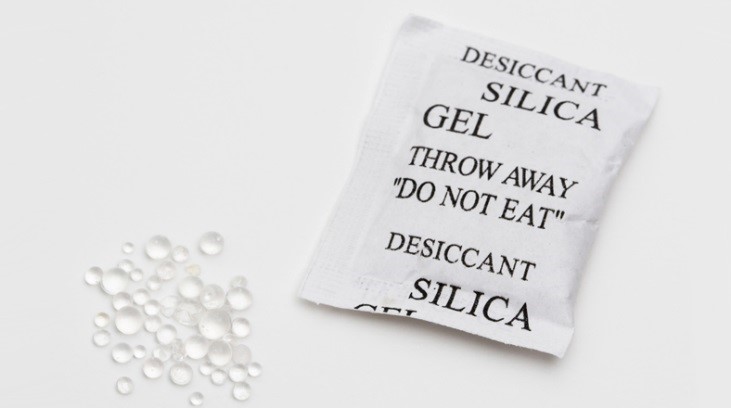
Dessicant Salts

To calculate the amount of DIN units of salts needed to ensure a “dry” environment, we will base ourselves on the DIN 55474 standard, which empirically defined as:


n = 1/a · ( V · b + m · c + A · e · D · t )

Where “n” is the number of DIN units, “a” the amount of water vapor absorbed per unit of salt, for 20 % RH a = 3 g; 40 % RH a = 6 g; 60 % RH a = 8 g, “V” the volume inside the packaging, “b” the humidity per unit volume of interior air, “m” weight in kilograms, “c” grams of humidity per kilogram of weight, “S” packaging surface in square meters, “e” correction factor, for 20 % RH e = 0.9, for 40 % RH e = 0.7 and finally for 60 % RH e = 0.6, “D” permeability in grams per square meter and finally “t” the storage time.

To summarize, in general, one DIN unit is equivalent to an absorption of 6g of water, to absorb these 6g of water approximately 30g of desiccant salts are necessary (depending on the type of salt and the conditions).


Thus we can take this table as a reference:

Desiccant salts

As we have already mentioned in this blog, there are many types of desiccant salts depending on their chemical composition, so we must always know their absorption capacity and the amount of DIN units per unit mass.

Dessicant Salts

As a conclusion we must assume to take as reference the DIN units and from this we will be able to calculate the grams of each salt that we need. Starting from these DIN units we will never make a mistake with the amount of salts needed.

Loading

Desiccant Salts

Desiccant salts, also called dehydrating salts, are chemical compounds that absorb moisture and water in very different ratios, depending on the amount of desiccants and their chemical composition, and can regenerate if subjected to a temperature above 150ºC.

There are different types of desiccant, the most common are:


  • Silica gel

These are small solid pellets of silicon dioxide obtained from sodium silicate. Despite being a chemical compound, it is not toxic or flammable by itself, although one of its components is highly toxic to humans if ingested or in contact with it for a long time, as it could cause silicosis. This is cobalt chloride, which is used to determine the amount of moisture in the gel. In this way, it causes the gel to change color when wet, varying from blue (dry) to pink.

Desiccant Salts
  • Bentonite

Is a very fine-grained (colloidal) clay of the montmorillonite type containing bases and iron. The name derives from a deposit found at Fort Benton, USA. The particle size is less than 0.03% of the average grain size of kaolinite.

Desiccant Salts
  • Calcium chloride

In addition to its use in pharmaceuticals and food, this compound is used as a desiccant, given its moisture-absorbing qualities. It is less common than silica gel, although it does not contain toxic elements and has a higher degree of moisture absorption. The problem is that it is not advisable to use it in spaces that are not hermetically sealed, since it runs the risk of liquefying, with the consequent elimination of its absorption capacity.

Desiccant Salts

Measures


There are four different units for measuring desiccants. The most commonly used due to their standardization are grams, but we also find NFH, DIN units and MIL units.

These would be the equivalences between them, taking as a reference the most used measurements:

Equivalency table

We recommend the use of one half kilo bag (16 DIN units) of desiccant or dehydrating salts per cubic meter. As a guideline, we can indicate that for a 20 feet container it is advisable to use 20 bags of 1 kg. These data are estimates since, depending on the cargo to be transported (sensitivity to oxidation and/or corrosion mainly), the proportion of salts should be adjusted to maintain the relative humidity at the established rates.


Packaging


The desiccant can be purchased in bulk or packaged in breathable bags for use in containers or inside packaging.

The bags are made of non-woven textile so that moisture passes through them and can be picked up by the compound. Now, certain desiccant manufacturers have begun using another material called Tyvek, which is used primarily in home and building construction to prevent moisture.

This material is made of high-density polyethylene and nonwoven olefin fiber, so it is highly breathable and its uses are very diverse. Although it looks like paper, we must not forget that it is plastic when it comes to recycling.

As we mentioned at the beginning of this section, desiccant bags are frequently used in containers for shipping goods by sea.

Salt compounds and moisture can cause damage to the goods. For this reason, many containers come with special cables or rings for the placement of desiccants.

In this case, a hook or hooks, usually made of plastic or metal, are added to the bags to attach them to the walls of the container. If the container has no means of hanging the bag, many manufacturers incorporate a special adhesive to attach the bag directly to the inner side walls.


Other remarks


There is a chemical compound called dimethyl fumarate, DMF, which is also used as a desiccant.

Years ago the Finnish doctor Tapio Rantanen discovered that it can cause severe allergic reactions and large skin eczema, even in very small proportions, after the marketing of this product in sofas by a Chinese company, with the aim of preventing the furniture from deteriorating with humidity, resulting in several cases of affected people in several countries around the world, including Spain.

For this reason it is very important to make sure that the desiccant that we are going to use is free of this substance and that it has passed the pertinent controls that indicate it.

It is also common to find in the desiccant packages cards indicating the moisture content of the salts, thus warning if it is necessary to replace the package in case they no longer absorb water vapor.

Indicator cards

These cards work by changing color, in such a way that when their blue color disappears and turns to a light pink, as in the case of silica gel, it means that the desiccant salts have already exhausted their absorption capacity.


In conclusion, you will have to choose the type of desiccant that you believe convenient and in the right measure depending on the volume of the load and how it is packed. It is always advisable to use it, since humidity is present everywhere and in certain regions and countries more than in others, but above all it is an indispensable requirement for sea and river transport, combining it with other types of materials for adequate protection.

Loading

Packaging for Exporting Automotive Products

Packaging represents a strategic factor in the supply chain. Even more so in times of uncertainty like the ones we are living in.

Automotive companies and the ancillary industry know that optimizing their investment in packaging reduces costs, time and storage space. A key aspect considering the difficulties the sector is going through due to the shortage of microchips, the war in Ukraine and the rising cost of energy.


Packaging solutions for the automotive industry

The automotive industry works with tight deadlines. It is crucial that all components in the chain arrive on time and in perfect condition at the assembly line.


Custom Packaging

Automotive manufacturers’ vehicles are made up of parts with different weights, volumes, shapes and sizes. At 360 Eco Packaging we design each packaging according to the type of part to be protected, the means of transport and destination, incorporating as many as possible in order to optimize the logistics process to the maximum.


Protections and packaging for batteries


Parts in the automotive sector are delicate. The dashboards and windows must be protected against possible impacts or vibrations during transport. Different auxiliary means are usually used to secure the goods, technical foams or corner protectors, which allow each part to be immobilized, preventing them from colliding with each other or moving during shipment.

Bulky parts such as engines or bodywork may require special packaging, such as heavy-duty crates or shrink wrap, which adapts to the contours of the cargo. Batteries and electrical components are considered dangerous goods and require special transport conditions. We are currently participating as a member of the CTN 192 SC 03 Subcommittee (UNE/ISO) in the development of a new regulation in the field of transport of dangerous goods, together with AENOR and the Ministry of Industry.


Packaging for the automotive and railway industry


Automotive components are not usually manufactured in one place, but arrive at the assembly line from different origins and suppliers.

Our automotive export packaging is made of ISPM 15 certified wood for international trade and transport of dangerous goods (ADR, IMDG, RID, IATA) to any destination in the world.

Our high quality reusable boxes can reach a resistance of up to 1,200 kg. Assembly and disassembly is done without the need for nails or tools, quickly and safely. And once disassembled, it takes up 20% of its size, saving space and storage costs.

Considering that many international shipments are subject to customs inspection, it is a very useful system that can be opened and closed in the same way without damaging the box, saving time and hassle.


Since our beginnings in 360 Eco Packaging we have been linked to the automotive and railway sector, working with renowned companies that rely on our experience. Check here our packaging and protection solutions for the automotive sector.

Loading

What are the requirements for the packaging of aircraft parts?

The aeronautical industry is one of the sectors with the highest growth forecasts for the coming years. Due to its capacity for investment in R&D, job creation and export vocation, the aeronautics sector is considered a strategic sector for the Spanish economy. In fact, Spain is the fifth largest aeronautical power in Europe.

Innovation, improved competitiveness throughout the value chain and sustainability are some of the challenges facing a sector whose manufacturers demand high quality and environmental standards from their suppliers.


How are aircraft parts transported?


Aircraft components are usually manufactured by various companies on the European continent. They are then transported by air, sea or land to the final assembly plant.

Packaging companies, for their part, must provide customized, innovative and sustainable solutions that protect the parts and meet delivery deadlines so as not to slow down assembly.


Special packaging for high volume cargo


The aeronautical industry is characterized by the transport of large-volume parts that require customized packaging solutions. Among the most widespread are returnable packaging for large-tonnage equipment, which can be reused, optimizing logistics processes and saving costs.


Preliminary study and validation of packaging for large tonnage cargoes


Large-volume loads require a detailed study of protection, transport, handling and storage requirements. This involves follow-up meetings, packaging of the goods at the customer’s premises, as well as load tests until the optimal packaging is validated.


Anti-corrosion Packaging


Most of the aeronautical industry is dedicated to the manufacture of aircraft and structures, while the ancillary industry develops engines, equipment, spare parts and systems.

And structures, while the ancillary industry develops engines, equipment, spare parts and systems. For their transportation, auxiliary packaging products are needed to provide long-lasting protection against corrosion, as well as goods monitoring devices to detect possible impacts during transportation or storage.


Export Packaging


Most of the parts and components manufactured for the aeronautical industry are destined abroad. It is essential to know the international regulations and to have certified packaging for foreign trade.


Wooden packaging for aeronautical parts – phytosanitary certification

The packaging industry is basic in the distribution chain of aeronautical parts and components.

Our most commonly used packaging solutions for export, both for large volume parts and aeronautical spare parts are folding wooden crates, cages, high racks and pulp roll cradles, pallets and wooden boxes of large tonnage with wooden reinforcements as racks and diagonals, to support more load and weight than usual. This type of packaging is ISPM 15 certified.


Packaging for aeronautical parts – Use of wood


The wooden crate is disassembled, which facilitates visual inspection of the load without breaking or unnailing the side or lid. This allows the base to be used for auxiliary transports before closing the crate for shipping. And once disassembled, it occupies approximately 20% of its size, saving storage costs.

360 Eco Packaging manufactures packaging specially designed for different sectors. Consult our packaging for the aeronautical sector.


Loading

What is the most suitable packaging for transporting Solar Panels?

Demand for solar panels is experiencing strong growth in the European market as a result of rising electricity and gas prices. In Spain, solar energy grew by 37% in 2021 compared to the previous year. And everything points to this trend consolidating thanks to the aid plans for self-consumption, the agility in installation licenses and greater environmental awareness.


Packaging manufacturers are no strangers to this energy transformation. For years, packaging engineering has been providing solutions for large and heavy equipment, machinery and goods that require special treatment for storage and transport, such as packaging for glass, crystal and solar panels.


Factors to consider when transporting Solar Panels


Not all goods are the same and do not need the same protection. It is important to know what type of packaging to use depending on our merchandise to protect it against external agents such as heat, humidity, corrosion or impacts that it may suffer during the journey and arrive at its destination as if it had just left the factory.


Solar panels are composed of photovoltaic cells formed by silicon wafers. Due to their nature, they require packaging that is suitable for their weight, allows stacking and incorporates protective elements that absorb possible vibrations or impacts that could compromise their integrity.


Until recently in the solar energy sector, it was common to use metal racks for the maritime transport of containerized solar panels. However, metal is vulnerable to corrosion. And these types of metal structures are often damaged by repeated use of the forklift’s claw, resulting in a shorter service life.


As a result, they have been replaced by logistical solutions that are more advantageous in terms of both safety and economic profitability.


Advantages of wood packaging for solar panels and glass


Wood is a durable material, which allows for greater customization and reusability of the packaging.

Specialized packaging for the solar industry stands out for its maximum capacity optimization, being between 5 and 7 percent higher than other packaging used in this sector. By maximizing the number of pieces per container, direct savings in transportation costs are achieved.


As in the case of glass packaging, wood packaging for solar panels complies with ISPM15 certification for international transport, and is equipped with corner protection to prevent possible breakage of parts during transport.


Another benefit is the ease of handling. As it does not use nails, it can be assembled without the need for tools, making this task faster and safer. And since all its components can be disassembled, the space it takes up after use is minimal.


Today there are customized packaging solutions that adapt to the particularities of each merchandise and sector.


Contact us for a correct choice.


Loading

Sustainable forests to drive a greener, cleaner and more responsible economy

Forests are one of the most valuable natural resources for their social, economic and environmental benefits. Wood is also the only material that continues to absorb and store CO2 from the atmosphere for years.

For the European Union, forests are a priority. The new EU Forestry Strategy 2030 includes measures for the protection, conservation and sustainable management of forests, within the framework of the European Green Deal to curb climate change. The aim is to promote forest management practices that are more respectful of the climate and biodiversity, as well as to encourage the responsible use of wood.

Wood is a recyclable, renewable and biodegradable raw material. Qualities that fit with the principles of the circular economy. An intelligent use of forests would help to protect the environment, repopulate territories and generate employment. That is why organizations wishing to move towards a responsible economy model include in their plans the PEFC chain of custody certification, which endorses good practices along the entire wood value chain.


What is Chain of Custody?


Chain of Custody certification allows companies to label their products as coming from sustainable logging or recycling.

This certification can be done by two entities:

  • Forest Stewardship Council® (FSC®).

  • Programme for the Endorsement of Forest Certification (PEFC).

Both represent a useful tool for tracing the sustainability of any type of product made from forest raw materials, both for the companies that market them and for the consumers who buy them.

In Spain, 1,646 companies already certify their products through the PEFC forest management system and the number is increasing every year. The certified forest area has also grown, as has the number of foresters and forest owners, as can be seen in the search engine for certified areas and the search engine for Sustainable Forest Management certificates on the PEFC Spain website.


Benefits of PEFC certified Wood


Chain of Custody certification is essential for companies seeking to access environmentally and socially responsible markets or to demonstrate compliance with public or private purchasing policies that specify the sourcing of environmentally responsible materials as a requirement. For example, the European Union Ecolabel system for furniture or the LEED rating system issued by the Green Building Council in the Leadership in Energy and Environmental Design category.

The PEFC seal is key to the development of the market for sustainable forest-based products, which are increasingly in demand and gaining social recognition.


How to recognize a product of sustainable forest origin?


Consumers can identify and choose products based on a responsible forest management model. In fact, 8 out of 10 consumers prefer companies to label the sustainable forestry products they use.

A product or packaging of sustainable forest origin is distinguished by the FSC®/PEFC seal with the visible logo, accompanied by a numerical code composed of nine digits, unique to each certified company.

It is surprising to see the number and diversity of items that can be found with the FSC®/PEFC label or printed on cardboard or wood: furniture, textiles and footwear, food, hygiene products, as well as wooden containers and packaging.

As consumers, we play a decisive role in the future of our forests and the development of a greener and more sustainable economy. Turn to certified wood suppliers.

Loading

Types of Returnable Packaging III: Plastic Packages

As we told you a few days ago, during this month in the blog, we talked about the different types of returnable packaging that exist.
In this post, we define plastic returnable packaging whose purpose is optimal for transportation and storage over long periods of time.


The logistics industry is beginning to clearly perceive the advantages of using returnable transport packaging systems.

Compared to single-use packaging, returnable packaging optimizes the supply chain, making it more efficient and environmentally friendly. Although this type of packaging requires an initial investment, it usually pays for itself within the first few months and leads to significant savings in logistics costs. See for yourself by calculating how much you can save per year with returnable packaging.

There is a wide range of returnable packaging solutions for every need. We have already explained which wooden returnable packaging is commonly used and which metal returnable packaging is the most commonly used. In this post we will explain the most commonly used plastic returnable packaging and its benefits.


Properties of plastic Packaging


Plastic is one of the most commonly used packaging materials. It stands out for its lightness, resistance and high protection against external factors such as humidity, temperature or microorganisms. All these innate characteristics have made it an essential packaging material for the food, agricultural and pharmaceutical sectors.

Plastic packaging can be easily handled. And because of its durability, it is a returnable packaging with an excellent price/performance ratio. Especially now, when due to the scarcity of raw materials such as wood and the rise in market prices, it is a very competitive product.


What are the most common plastic returnable packages?

The most commonly used plastic returnable packaging models are:

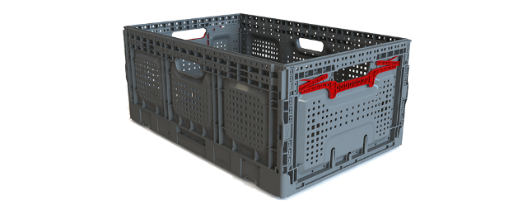
They are detachable, stackable and very versatile. They can be folded, taking up less storage space. They save 85% in return transport and storage. There is the possibility of providing the box with a lock, securing the goods. Manufactured in polyethylene and polypropylene. They are suitable for food use and are available in different sizes and types.

Foldable plastic box-FlexiCrate ©
Returnable packaging- Plastic
Reusable Packaging - Plastic packaging
Returnable packaging - Plastic Packaging
  • Removable and reusable plastic packaging.

This type of plastic packaging is characterized by its strength, low weight, reusability and re-stackability. They are available in several standard sizes that cover most of the needs of the packaging sector.

Plastic collapsible crate – Container storage box
Returnable Packaging -Plastic Packaging

Manufactured to support medium and heavy loads, plastic pallets are lightweight, durable and reusable. They are available in a range of standard sizes.

Returnable Packaging_plastic packages
  • Lego pallet/paletkit.

It is a modular plastic pallet that can be disassembled for its return. The parts that deteriorate over time can be easily replaced.  In addition, it is dimensional according to your needs. Being modular, it can be assembled as long as required and benefit from a logistical return.


  • Woodyplast collars.

These collars are manufactured with a combination of materials: 70% wood (spruce) and 30% plastic (PP + additives). This mixture is then thermoplastically processed into granules and WPC is obtained. They are highly resistant to moisture and are 100% recyclable. They are available in standard sizes.

Returnable Packaging_plastic packages

In short, there are different plastic returnable packaging that can be an efficient and cost-effective alternative to your conventional packaging system.


Contact 360 Eco Packaging. We will help you find the right solution for your logistics processes.

Loading

Types of returnable packaging II: Metal Packagings

Although less used than other packaging materials such as wood or plastic, metal has a number of properties that make it an interesting packaging for transport.

From the point of view of protection, metal packaging stands out for its durability and resistance, being a guarantee in the case of goods that have to undergo long periods of storage and transport. For this reason, metal packaging is common in the automotive industry.


From the point of view of sustainability, metal is 100% reusable and recyclable, and its properties remain unchanged for a long time. In fact, it is estimated that 80% of all metals ever produced are still preserved. This makes it an option to consider when evaluating it as a returnable packaging.


The most frequently used returnable metal packaging on the market are:

  • Reusable metal packaging.

Removable metal crate or cage, made entirely of metal. Composed of sheet metal sides and metal base designed for stacking. It offers high mechanical resistance and resistance to high temperatures. It is dismountable and allows a high reusability.

Metal Packaging - Products form Dajusa and CarrosPF

Metal Packaging – Products form Dajusa and CarrosPF


  • Modular metal box.

Enclosed metal trolley ideal for packing, transporting and storing cabling and equipment. The interior of the box is modular, which means that the accessories can be placed without tools on the rails adapted for this purpose and on four different levels. It can be opened on both sides without tools and is stackable.

Metal returnable packaging - Cargo-Cart product

Metal returnable packaging – Cargo-Cart product


Metal returnable packaging - Cargo-Cart product

Metal returnable packaging – Cargo-Cart product


  • Flight cases.

Customized metallic box with high resistance. Suitable for air, sea and land transport. This type of packaging is used in a wide variety of sectors: aeronautics, industry, audiovisual, medicine, tooling, etc.

Flight case - Product from Thomann

Flight case – Product from Thomann

It is a product with very high mechanical resistance and great reusability.


  • Aluminum pallet.

Aluminum pallets are manufactured from a wide range of high quality aluminum profiles. They have a high mechanical resistance of up to 3000 kg. load. They are available in standard sizes and with the possibility of custom manufacturing.

Metal pallet, metal returnable packaging. Product of exportaglobal.co.uk

Metal pallet, metal returnable packaging. Product of exportaglobal.co.uk


Metal pallet, metal returnable packaging. Product of exportaglobal.co.uk

Metal pallet, metal returnable packaging. Product of exportaglobal.co.uk


Not all returnable packaging is cost-effective for all companies. Contact packaging professionals to see if it is feasible to replace your current packaging with returnable packaging to optimize your supply chain.

Loading

Types of Returnable Packaging (I): Wooden Packaging

Returnable packaging is a solution that more and more companies incorporate into their supply chain for its environmental and economic benefits.

Depending on the material, we can classify the different types of returnable packaging into three groups: wood, metal and plastic.

In this post we describe the most common returnable wooden packaging and its advantages.


Advantages of wood as returnable Packaging

Due to its strength, wood continues to be one of the most widely used materials in packaging for the transport of large or heavy goods. It also acts as a thermal and acoustic insulator and is highly resistant to fire. It is a durable, reusable and 100% recyclable material.

For this reason, wood packaging is considered one of the most sustainable and highest quality for export.
In this regard, it should be remembered that wood packaging for export is regulated under the International Standard for Phytosanitary Measures ISPM-15, which requires treatment to prevent pests.


What are the most commonly used returnable wooden transport packages?

There are different designs of wooden returnable packaging to adapt to any merchandise.

The most common are:

  • Foldable packaging made of processed wood board and wood,

Clipping Crate ® model.

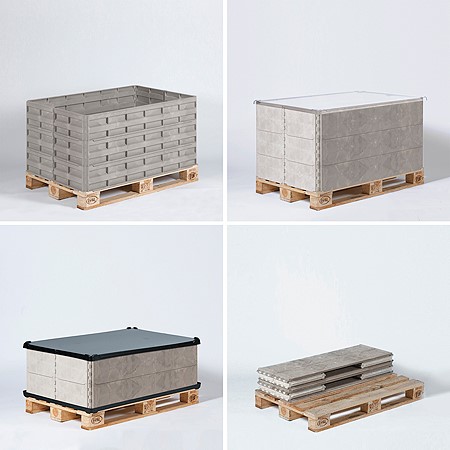
It is a model of high quality reusable box, patented by 360 Eco Packaging. It has a simple and ergonomic assembly and disassembly, without tools. It minimizes transport and storage space when not in use.

It can be manufactured in different types of wood boards (mainly plywood, OSB3, MDF and chipboard). The Clipping Crate® is standardized in its dimensions and can be made to measure. It has a replacement service for damaged parts for all its ranges.

Types of Returnable Packaging I_ Wooden Packaging

Types of Returnable Packaging I- Wooden Packaging


It is made of plywood board with steel reinforcements on the sides, which allows the box to be folded. It is reusable, stackable and available in different sizes.


It is a modular packaging composed of wooden rings that allow the height to be modified as required. They are made of pine wood boards joined by galvanized steel hinges, which are stacked on a pallet.

Types of Returnable Packaging I- Wooden Packaging

Types of Returnable Packaging I- Wooden Packaging


This returnable wooden packaging solution stands out for its simple anchoring system and its ability to be reused. The frame is collapsible, which represents an efficient alternative to save costs in storage and transportation.

It is an economical, resistant and durable packaging model, as it can have a useful life of up to 10 years. It is replaceable. If a fence is damaged, it can be quickly replaced by another of identical characteristics.


To prevent the entry of dust or rain, specially designed covers are available for this product. It is available in standard sizes and can be made to measure.


Wooden supports with boards with or without separation between them and wooden blocks or slats at the base to facilitate the transport and mobility of the load. Wooden pallets can be open or closed, with two or four entrances, blind, reversible or reinforced to support heavy loads. They are available in standard sizes and can be made to measure.


Packing provided with wooden boards, with a construction system similar to that of a wooden box, but with a greater separation of the boards from each other, which makes it lighter. They are manufactured with metal reinforcements so that they can be disassembled and reused. Standard or custom-made.


If you want to know how to reduce logistic costs with a returnable packaging, please contact our technical department.

We will study the most suitable solution for your product and logistic process.

Loading

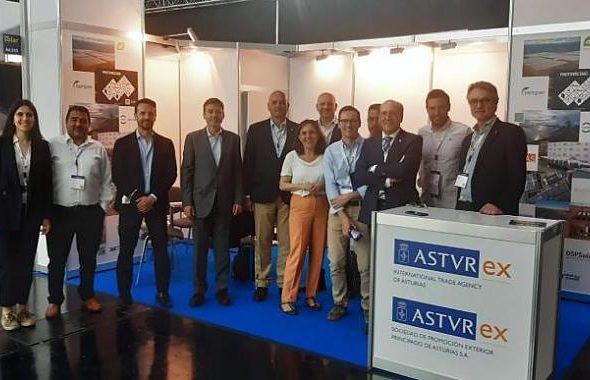
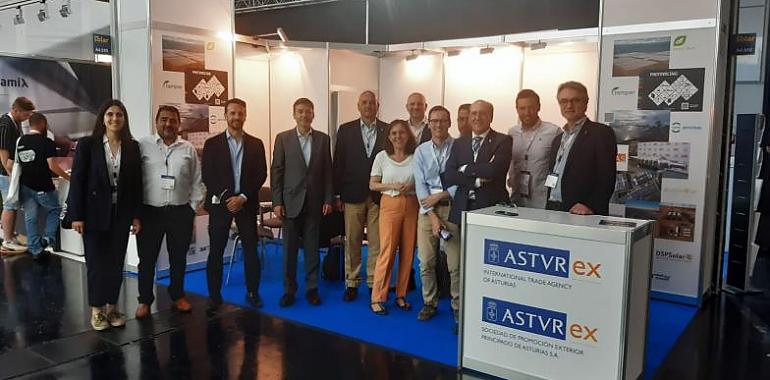
Presenting our Sustainable Packaging at Intersolar Europe

Presenting our Sustainable Packaging at Intersolar Europe

On May 11, 12 and 13, 360 Eco Packaging – Encaja Embalajes had the opportunity to present its packaging solutions for the solar industry at the Intersolar Europe Fair, the most important exhibition of the sector worldwide, held in Munich (Germany).

The meeting was attended by Jesús Álvarez, commercial director, and José Ramón Novoa (ASTUREX; Sociedad de Promoción Exterior Principado de Asturias S.A.)

Our participation was possible thanks to the Sociedad de Promoción Exterior Principado de Asturias S.A. (ASTUREX), which organized a joint stand with 8 Asturian companies that supply products and services related to the solar energy value chain.

With commercial actions such as Intersolar Europe, ASTUREX contributes to a greater presence of Asturian companies in international markets.

On this occasion, among all the participating companies, we have highlighted the potential of the region as a producer of goods and services in the value chain of renewable energies linked to solar energy.

We were accompanied by: Alusín Solar S.L.U., Distribuciones Solares del Principado S.L. (DSP Solar), Duro Felguera S.A., Ingeniería y Suministros Asturias S.A., Mecanizados CAS S.A., Procinsa Energías Renovables S.L. and Temper Energy International S.L. (Temper).


As part of the fair, 360 Eco Packaging – Encaja Embalajes informed attendees about the most efficient packaging for transporting solar panels, sustainable packaging and the reusability of wooden packaging and its impact on logistics costs, as well as the specifications that this type of packaging must meet for export.


Why Intersolar Europe?

Intersolar Europe is one of the most significant events in the energy sector calendar.

The event brings together more than 50,000 visitors and around 1,500 exhibitors interested in showcasing their innovative products, solutions and business models for the energy transition and security of supply in Europe.


The importance of Sustainable Packaging at Intersolar Europe

As industrial packaging manufacturers, we remain attentive to market demands in order to offer solutions that meet the needs of the supply chains of each sector and customer. 

It has been an honour for us to present our Sustainable Packaging at Intersolar Europe.

See you at the next edition!

Presenting our sustainable packaging at Intersolar Europe

Presenting our sustainable packaging at Intersolar Europe

Loading

X