Tag Archives: wooden packaging

Custom Packaging for Electrical Equipment

Why should you use custom packaging for electrical equipment?


The use of custom electrical packaging is important because electrical manufacturers work with high-value, often fragile and heavy equipment and products. Engineering, industrial and energy solutions in this sector increasingly have connections and finishes where the slightest impact can render the product unusable and result in financial loss.

As a result, the supply chain in this sector is one of the most demanding in terms of transportation and storage, requiring packaging that offers maximum security during the different phases of distribution.

The power and energy sector is also one of the most concerned about reducing its carbon footprint, so there is a growing interest in implementing sustainable packaging.


What are the benefits of custom packaging for electrical equipment manufacturers?


This is a big challenge for packaging companies. For us, it is essential to carry out a technical-economic study based on which we design the most efficient packaging solution to optimize the logistics process.

In most cases, customized packaging is the best option because it offers significant advantages:

  1. By adapting to the goods, they guarantee integral protection during transportation.
  2. Mobility and handling of products is more efficient, saving packaging time and auxiliary packaging costs.
  3. By reducing the use of unnecessary materials, space is used efficiently and excess waste is avoided.


Wood Packaging for Electrical Equipment and Components


Due to its strength and versatility, wood packaging for the electrical industry has proven to be the most efficient for your supply chain.

Custom Packaging for Electrical Equipment

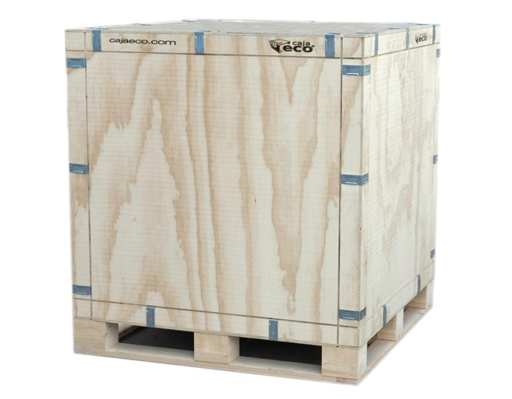
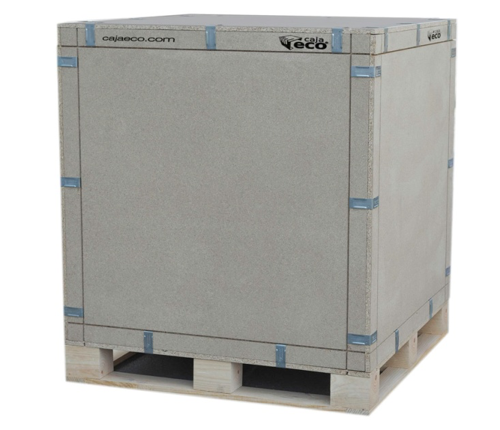
Our wooden crates are manufactured with high quality materials, shock and moisture resistant. They have ISPM 15 certification for international trade, valid for all types of transportation (air, sea and land).

Assembly and disassembly do not require the use of tools or nails. It is quick and safe to handle, and when disassembled it takes up a fifth of its size, saving on storage costs.

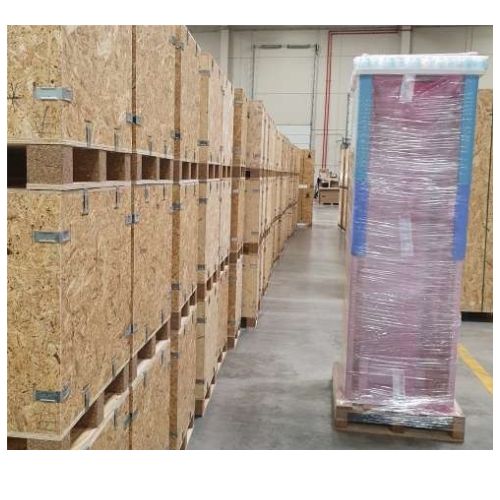
Because it is modular, it can be fully utilized as it can be used in components. The base can be used for auxiliary transportation before the box is completely closed for shipping.


Success story: Registered fastening system for electrical cabinets

If you follow our blog, you will have noticed the importance of packing aids in securing loads during transportation.

Lashing and securing elements are necessary complements because they provide additional protection. At 360 Eco Packaging, we are always thinking about new packaging solutions, so we have been studying how to incorporate fastening systems into the packaging itself, without altering its characteristics.

And Eureka, the result is an innovative internal lashing system for electrical cabinets.

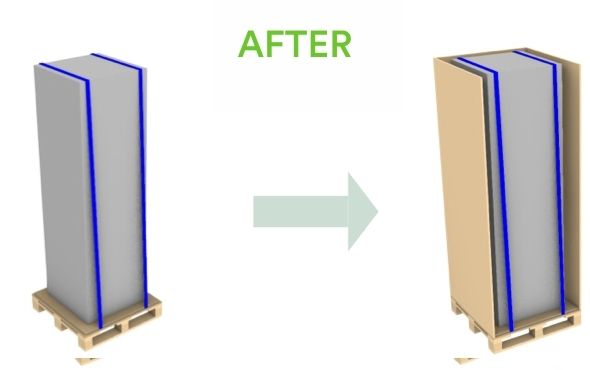
Customized wooden cabinet for the transport and handling of electrical material. Registered system.

With this device, we are able to quickly and efficiently secure the case by integrating the immobilization elements into the base of the case itself.

Thanks to this system, we have eliminated unnecessary packaging aids such as pallets, supports, cleats, etc. In this way, we optimize weight and internal volume, which translates into a reduction in logistics and transport costs for our customers, especially in air transport.

In 360 Eco Packaging we have a wide experience in packaging for industrial sectors.

Contact us and take advantage of the economic and environmental benefits of using customized packaging for your product.

Loading

Issues to Consider in the Transportation of Goods by Road

The wheel is one of the most important inventions in human history. It revolutionized the transportation of goods, thus stimulating foreign trade and the economic development of countries.

In Spain, almost 95% of goods are transported by road. Because of its speed, the vast majority of companies choose road transportation instead of rail to transport their products to other countries in the European Union.

This is despite the higher costs. The reason is that in logistics, transport optimization, cargo safety and delivery reliability take precedence over economic criteria.

In this article, we review the most important issues in road transportation.


Advantages of road transportation

Transporting goods by road offers companies a number of advantages over other modes of transportation:

  • Speed.
  • Safety and versatility to transport any type of goods.
  • It is the only means that guarantees a door-to-door service.
  • Traceability, allowing vehicles and loads to be tracked.

But it is not without its disadvantages:

  • High accident rate compared to trains, planes or ships.
  • The volume of loads is limited, in contrast to sea or rail, which have a greater capacity.
  • Highly polluting and subject to fluctuations in fuel prices.


Load units and measurements in road transport

Road transportation has become increasingly standardized, which has made it easier to combine with other modes of transportation.

The standardized vehicle for transporting goods by road is the truck, and the most commonly used unit load in this mode of transport is the wooden pallet. As a result, trucks are designed with pallet dimensions in mind, so it is possible to calculate how many pallets will fit on a trailer.

This palletizing process not only minimizes handling, but also optimizes space in the warehouse and on the truck, thus reducing costs.

Issues to Consider in the Transportation of Goods by Road

The basic rules for transporting goods by road 

In Spain, the general legal framework for land transportation of goods consists of three main regulations:

  • The LOTT, or Law 16/1987 on the Regulation of Land Transport, is the main piece of legislation covering road freight in Spain. It lays out the general principles of road transport and the role of public administrations.
  • Royal Decree 1211/1990, which approves the Regulations of the Land Transport Law (ROTT). It covers things like supervisory bodies, control and safety elements, and contracts.
  • This is Directive 85/3/EEC from the Council of the European Communities on December 19, 1984. It covers all the technical details of the main vehicles used in road transport.

On top of that, international conventions also apply, such as:

  • CMR stands for Convention for the International Carriage of Goods by Road.
  • ADR stands for European Agreement concerning the International Carriage of Dangerous Goods by Road.

The importance of storage when transporting goods

When shipping goods by road, we need to think about things that can affect the safety of the cargo and how well the process works.

That means there are certain rules for transporting different types of goods.For instance, perishable products must be kept cold, while chemical or flammable products require special safety measures.

It’s also important to think about what we’re using to secure the cargo. Here’s a quick summary of the main technical standards you need to know about:

Issues to Consider in the Transportation of Goods by Road

These standards are based on EN 12195 for the stowage and securing of cargo: “Devices for securing cargo on road vehicles” and its parts 1, 2, 3 and 4 regulate the securing or lashing specification that we must apply to the cargo, as well as the fastening elements used.

In addition, as we have already mentioned, for the transportation of dangerous goods by road, the ADR 2019 regulations, of international application, must be taken as a reference.

Issues to Consider in the Transportation of Goods by Road

These are the main standards used in road transportation, but they are not the only ones. Transporting goods by road is a complex task, but fundamental to any supply chain, so you need to be up to date with the required regulations.

At 360 Eco Packaging we can help you choose the best packaging to secure your goods in road transport. Contact us today.

Loading

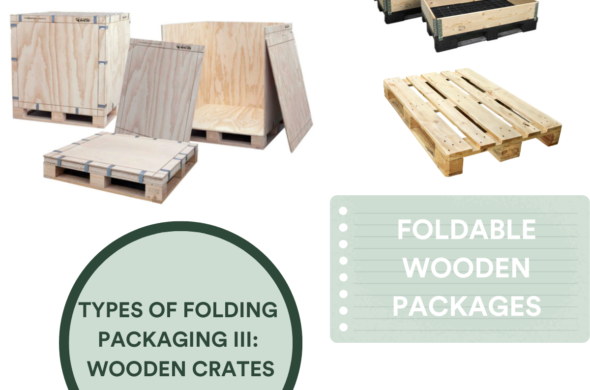
Types of folding packaging III: Wooden Crates

Wooden folding collapsible crates are one of the most widely used export packaging systems since the dawn of trade. Throughout the history of packaging, man has transformed wood into barrels, crates, cradles and boxes of large tonnage in order to obtain a robust solution that would allow him to store all types of products and be able to ship them by sea, land or air.

One of the most innovative of these has been the collapsible crate made of disassembled wood. Thanks to the development of engineering, the cumbersome, heavy and difficult-to-move models with nails have gradually fallen into disuse. In their place, a much more cost-effective, sustainable and easy-to-handle protective solution for transporting goods has emerged: the collapsible crate.


Benefits of wooden collapsible crates

It should be noted that all wooden packaging traveling outside the European Union must comply with the international standard ISPM-15, which certifies that the wood is free of harmful pests and bacteria.

Companies dealing with fragile products and international shipments often turn to wooden collapsible crates for their many advantages.

Our flagship product is Clipping Crate®:

Clipping Crate®

Easy to handle

Wood is a resistant material that can withstand shocks, vibrations and temperature changes. In addition, this type of packaging is designed to be easy to handle and to speed up opening/closing at destination or in transit (customs inspection).

Types of folding packaging III Wooden Crates

Reusable, Removable and Recyclable

Collapsible wooden crates can be disassembled and stored for future use. And they are repairable. With spare parts available, any of its parts can be easily replaced. Once it has reached its useful life, it can be returned for recycling. Thus, no waste is generated.


Customizable

It can be manufactured in standard and custom sizes, and can be personalized with the company’s brand or logo. This improves brand image and product identification during transport and storage.


Reduce costs

They are proven to help reduce the company’s logistics costs. Because they are stackable, they take up less warehouse space, which means fewer resources to store and transport them. This, coupled with their long shelf life, provides a quick return on investment.


Calculate here how much your company can save by using returnable packaging.

Types of folding packaging III Wooden Crates

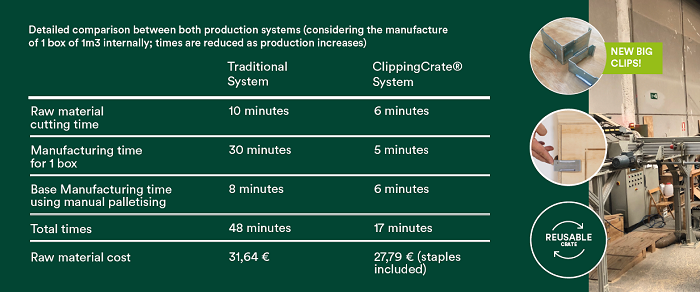
Clipping Crate® System

As mentioned above, our reference product in manufacturing is the Clipping Crate®.

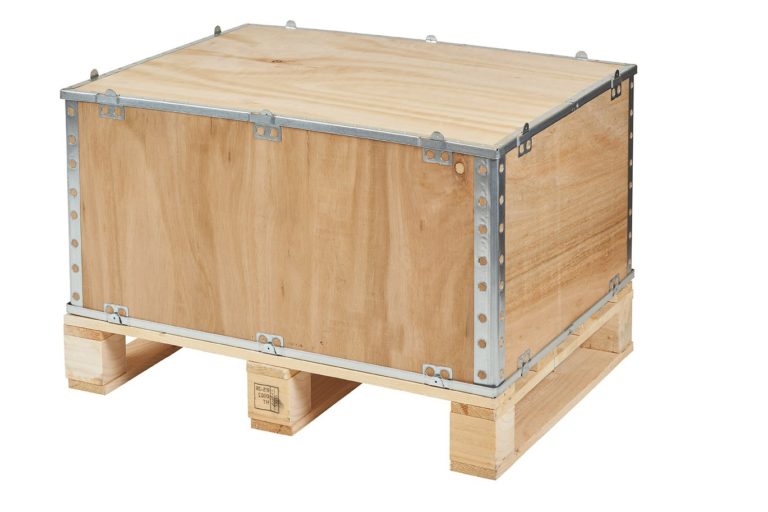
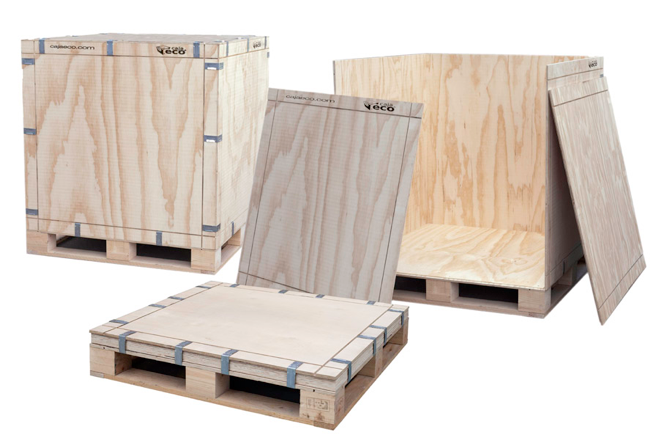
It is a reusable, economical, resistant box with an innovative design. In addition, it stands out for its closing system using galvanized zinc clips or staples, which give it flexibility. The box can be assembled and disassembled by one person in just a few minutes without the use of tools.


Contact us and start taking advantage of the benefits of folding packaging.

Loading

Oversized Packaging

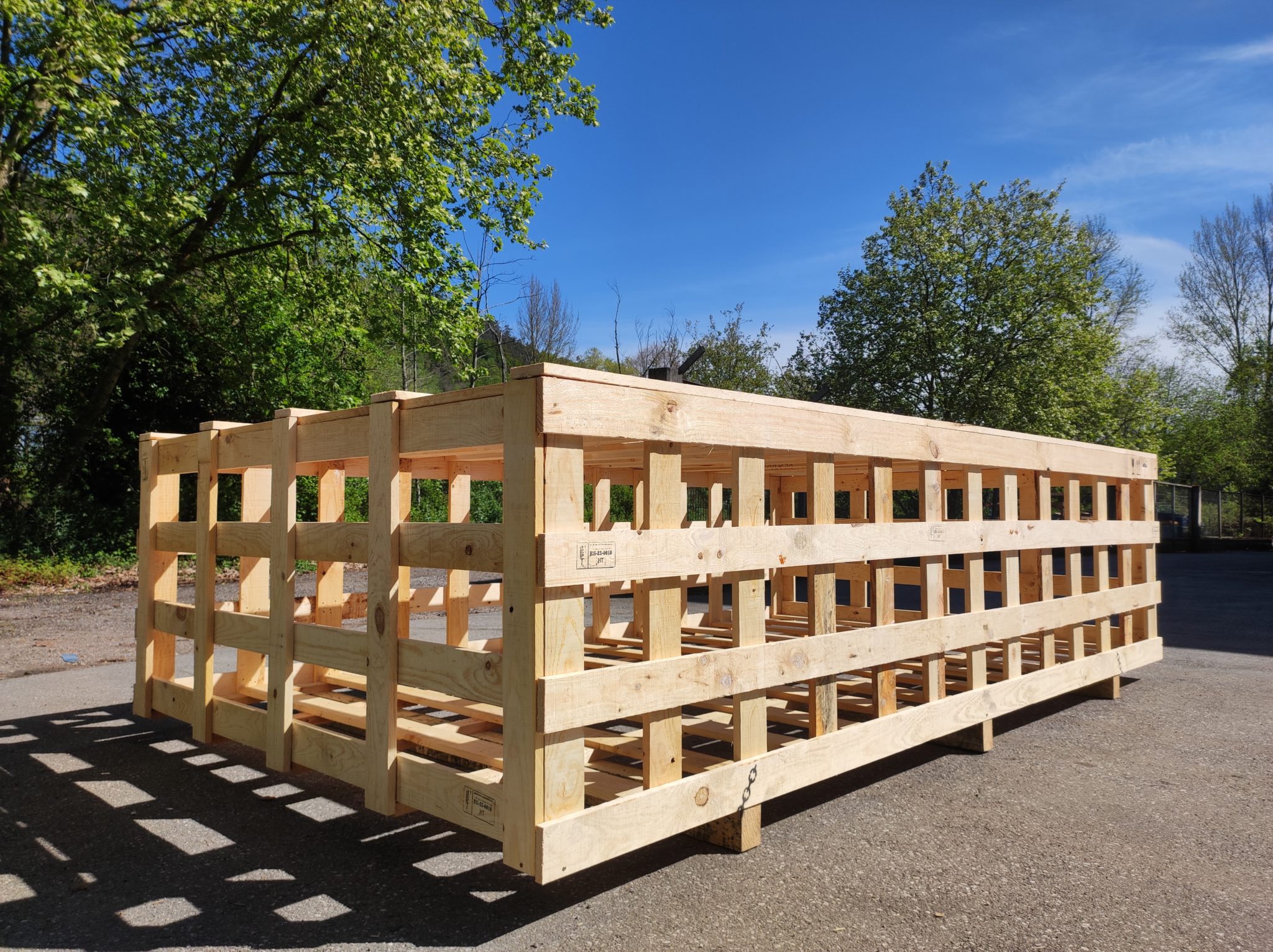
Any goods can be moved from one side of the world to the other by sea, air or road. However, there are loads that, due to their volume or dimensions, require special packaging and modes of transport to be able to do so.

In this post we will talk about packaging for large loads, or also known as packaging for large dimensions or packaging for oversized cargo.


What is oversized cargo?

We refer to oversized cargo when, due to its size or tonnage, it cannot be transported in a conventional way, being necessary to resort to specially designed and manufactured solutions to be able to handle it safely.

For example, industrial machinery such as large engines, construction materials such as beams or pipes, as well as all types of packaging for aeronautical, automotive or renewable energy parts such as wind blades or solar panels.

Today, most of the companies in the industrial sector that operate at an international level need a goods protection service for large parts or loads.

Oversized Packaging

Packaging for oversized cargoes – Main considerations

In most cases, it must be approved for export, which means that it has to comply with ISPM-15 certification to avoid any problems at customs.

In addition, it must be reinforced to efficiently support the weight, and if we are talking about bulky goods, it may require a special platform to facilitate its movement.

Oversized Packaging

Phases when designing an oversized package

The first step is to conduct a preliminary study on the needs of the cargo: weight, size or other requirements. From production to delivery, each step is carefully planned and comprehensively oriented.

Our technical department develops the best type of protection taking into account factors such as packaging efficiency, use of sustainable materials and space optimization during transport, all from the best technical and economical point of view.

Mechanical considerations

At 360 Eco Packaging we are manufacturers, which allows us to offer ad-hoc packaging according to the needs of our customers.

The designs not only take into account the shape and size of the cargo, but also the use of products approved for storage and lashing in sea containers and trailers.

These are packaging aids, such as heat-sealable plastic and shrink-wrapped plastic, which act as reinforcement against external agents to protect items susceptible to damage by external agents, as well as retention systems to stabilize it, even if it has suffered some kind of impact during the logistics process.

Oversized Packaging

Economic Considerations

We also pay attention to the economic factor. We know that an excess of material and accessories could increase the cost associated with the process. Therefore, the custom design must be economically viable for the customer without compromising cargo safety.


Production and delivery

If necessary, we can carry out packaging of the goods at the customer’s facilities.

Please contact us without any commitment.

Loading

Main packaging certifications

Certifications are key indicators in any activity. Through these accreditations, packaging manufacturers can demonstrate that their products or services comply with the regulations required by transport agreements, and at the same time meet high standards of safety, quality or environmental responsibility. They are, therefore, a guarantee of how we do things.

ISO 9001 certification is one of the most widely implemented standards among companies. In our case, this seal accredits the quality of our processes for the design and manufacture of industrial packaging.

In the packaging field there are other valuable rules and certifications that we highlight below:

Phytosanitary-certified wood packaging material

The International Standard for Phytosanitary Measures ISPM-15 was created by FAO to regulate wood packaging in international trade in order to reduce the risk of introduction and spread of pests.

The ISPM 15 seal is based on a heat treatment that consists of the wood reaching 56 ºC in its core for at least 30 continuous minutes.

       Once the wood has been treated, the mark must be visible on at least two opposite sides of the wood.

The ISPM-15 standard affects packaging made wholly or partially from raw wood, such as pallets, crates, crates, crates, crates, dunnage, pallets, cable drums and reels. Plywood is excluded.

To obtain the ISPM-15 label, it is necessary to be registered in the national system and to pass the required annual audits, through the control of the traceability of the manufactured elements.

The issuance of a certificate will only be necessary if required by the phytosanitary protection agencies of the destination countries.

ISPM15

Certified Dangerous Goods Packaging

Dangerous goods are considered to be solid, liquid or powdered products that represent a risk to the safety and health of people or the environment.

The transport of dangerous goods requires specific approved packaging, with its corresponding certificate in accordance with the regulations of each mode of transport. The regulation par excellence in the transport of dangerous goods by road is the ADR (European Agreement concerning the International Carriage of Dangerous Goods by Road).

Compliance is also mandatory:

  • Rail RID (Regulations concerning the International Carriage of Dangerous Goods by Rail).
  • Air transport IATA (International Air Transport Association).
  • Maritime transport IMDG (International Maritime Dangerous Goods Code).

The UN has established a universal system of classification, packaging, marking and labeling of the different dangerous goods valid for all modes of transport.

Dangerous goods packaging can be made of plastic, cardboard or metal, but must always be properly labeled. In addition to the labeling required for each type of goods, according to its classification in the ADR, each package must show a UN number, among other data such as the manufacturer’s code, type of box, password, country and year of manufacture.

The ADR defines packing instructions for each UN number, according to which the physical-chemical specifications that the packaging must meet for a given good will be detailed.

Packaging with PEFC / FSC® certification

Nowadays, it is impossible to talk about quality without taking environmental criteria into account. PEFC and FSC® chain-of-custody certification guarantees good practices along the entire wood value chain.

PEFC-certified pallets, wooden crates and cardboard boxes use raw material from sustainable logging, recycled material or both. Choosing PEFC / FSC® certified packaging means promoting a responsible supply chain, contributing to sustainable forest management and the well-being of forest communities.

PEFC
FSC

These seals are also a competitive advantage in markets that require the supply of environmentally responsible materials.

Use certified packaging suppliers that add value to your logistics.

Loading

Packing for moving

Nobody is aware of what they have until they have to move, that is why in this post we will talk about packing for moving. Moving our belongings from one place to another requires good planning, starting with choosing the optimal packaging so that the move is resolved quickly and smoothly.

Like any other type of shipment, each move will require different packaging, depending on the contents to be transported and the mode of transport.

Packing for moving

What is the most suitable packing for a move?

The packaging systems for the moving or furniture storage sector share the following characteristics:

Packing for moving

Types of packaging for moving

No two moves are the same. Moving a house is not the same as moving an office where electronic equipment and components are moved, much less a transoceanic move in a container.

Depending on the volume of material to be transported, wooden, cardboard or cardboard combined with wood packaging solutions can be used.

The most common are:

Cardboard boxes

Cardboard boxes are the most common type of packaging used in removals. As is logical, boxes of different sizes are used, depending on the needs. From a weight of 8 kilos upwards, it is advisable to use two-channel cardboard boxes, which offer greater resistance and protection.

Large-volume cardboard boxes, available with flaps or lids, are used to move large furniture and belongings.

Packing for moving

Folding wooden boxes

Plywood transport crates with lids are the most commonly used for transoceanic moves. This type of box is made of ISPM15 certified wood, so it is suitable for international shipments.

It is a reusable, stackable and collapsible box. It consists of a lid, a base with support and a very consistent central body. The anchorage of the pieces is by means of metallic tabs, which gives it great resistance.

Packing for moving

Fillings to protect the inside of the boxes

Just as important as choosing the most suitable box for a move is to have protection and padding aids to protect the contents inside.

Packing padding products immobilize objects to prevent them from suffering any impact during transportation and protect them from humidity or vibrations so that they arrive at their destination in perfect condition.

An economical solution to protect ceramic pieces, glassware or fragile products, as well as to fill the gaps left in boxes, is cardboard netting.

Cardboard corner protectors and foam profiles are essential to protect the edges on the inside and outside of the boxes.

In international moves, and especially in sea transport, inflatable bags or airbags are used as a complementary system in cargo lashing to fill the gaps in containers and prevent them from moving.

Packing for moving

At 360 Eco Packaging we can’t move your things, but we can provide you with the necessary packing material to make your move as safe as possible. Contact us.

Packing for moving

Loading

Clipping Crate (Features)

We have been reviewing different packaging products that help us to preserve and transport our goods in perfect condition, all of them for sale in our company.

For this reason, today is the turn to talk about our flagship product, the Clipping Crate. A reusable, economical, easy, waterproof box with an innovative design: the packaging of the present and the future.

After years of research, what started as an idea came to life and became a serious project to improve the wood packaging sector as we knew it. Gone were the bulky boxes built with nails, difficult to move and of great volume and weight.


What is the Clipping Crate?


360 Eco Packaging is one of the first European companies to have patents in the packaging sector, one of them is the Clipping Crate, the first with fastening system by staples or galvanized zinc clips, which provide strength and flexibility. In this way, a single person can assemble and disassemble the box without the help of tools.

Clipping Crate (Features)

How does it work?


It facilitates the packaging of products difficult to move, especially when it comes to goods with a lot of weight and volume, since, once placed on the base, it is only necessary to place the corresponding sides and lid securing them with staples, easy and fast wood.

Since many international shipments are opened for customs inspection, it is a useful tool that can be opened and closed in the same way without damage to the box or nails to be nailed and uncoiled, saving time and worries.

Clipping Crate (Features)

Why do I save with Clipping Crate?


Being a detachable box, it saves logistics costs, since it takes up less space, either for transport or to be stored. It is not necessary to have a large amount of free space for storage until its reuse and, in terms of transport, costs are greatly minimized, since the height of the folded and palletized box decreases.


What size boxes have?


The Clipping Crate is standardized, which means that we have a wide range of measures in stock to cover any need, without forgetting that each packaging is unique and, In the same way, the customer who wishes can request your customized Clipping Crate with the measures you need.

Foldable wooden Clipping Crate (Features)

Can it be reused?


The Clipping Crate, for its strength and durability, can be used again, although the number of reuses is subject to the material of the box (plywood, OSB or chipboard) and to the use that is granted at all times.


Made of 15 mm plywood for the sides and 12 mm for the cover and base, makes up the high range of our product to be the most resistant.

Clipping Crate (Features)

Made of chipboard, is the most economical and has the least capacity for reuse. Its sides, lid and base are 15 mm thick.

Clipping Crate (Features)

Made of OSB 15 mm for the sides and 12 mm for the lid and base, is the standard quality-price product, since this material, in addition to strong, is economical, so it represents the best alternative to obtain the highest quality at the lowest price.

Clipping Crate (Features)

What does it mean that the box is eco-friendly?


The wood we use for our boxes comes only from sustained felling. In this way, we help to stop the indiscriminate felling of trees, protecting the environment. It has the distinctive international PECF that guarantees the correct environmental management of the forests from which it comes. In addition, our commitment is to plant one tree for each Clipping Crate supplied.

Not only that, but thanks to its reuse and the replacement of damaged parts, we contribute to consuming less wood, a material that is also easily recyclable.


Soon we will have a new post with more information about our flagship product the Clipping Crate.

Loading

Custom packaging for Electrical Equipment

Why should you use customized packaging for electrical equipment?


The use of customized packaging for electrical equipment is important because electrical equipment manufacturers work with high-value, often fragile and heavy equipment and products. Engineering, industrial and energy solutions in the sector increasingly have connections and finishes where the slightest knock can render the product unusable and result in financial loss.

This is why the supply chain in this field is one of the most demanding in terms of transport and storage, requiring packaging that offers maximum safety during the various stages of distribution.

The electrical and energy sector is also one of the most concerned with reducing its carbon footprint, so there is growing interest in the implementation of sustainable packaging.


What are the advantages for electrical equipment manufacturers of using customized packaging?


For packaging companies this poses a major challenge. For us, it is essential to carry out a technical-economic study on the basis of which we design the most efficient packaging solution to help optimize the logistics process.

In most cases, custom-made packaging is the best option, as it offers significant advantages:

  1. By adapting to the goods, they guarantee integral protection during transport.
  2. The mobility and handling of products is more efficient, saving on packaging time and auxiliary packaging costs.
  3. By reducing the use of unnecessary material, space is used and excess waste is avoided.


Wooden packaging for electrical equipment and components


Due to their strength and versatility, wood packaging for the electrical sector has proven to be the most efficient for your supply chain.

electric industry

Our wooden crates are manufactured with high quality materials, shock and humidity resistant. They have ISPM 15 Certification for international trade, being valid for all types of transport (air, sea and land).

Assembly and disassembly does not require the use of tools or nails. It can be handled quickly and safely, and once disassembled it occupies one fifth of its size, saving storage costs.

As it is modular, it can be fully utilized, since it can be used in components. The base can be used for auxiliary transports before the box is completely closed for shipping.


Success story: Registered fastening system for electrical cabinets


If you follow our blog, you will already have noticed the importance of packaging aids for securing the load during transport.

Lashing and securing elements are necessary complements because they provide additional protection.

At 360 Eco Packaging, we are always thinking about new packaging solutions, so we have investigated how to incorporate fastening systems to the packaging itself without altering its properties.

And Eureka, the result is an innovative interior REGISTERED LASHING SYSTEM FOR ELECTRICAL CABINETS .

Registered system for electrical cabinets

With this device we are able to fix the cabinet quickly and efficiently, by integrating the immobilization elements into the base of the box itself.

Registered system for electrical cabinets

Thanks to this system we have eliminated unnecessary packaging aids, such as pallets, supports, cleats… In this way we manage to optimize the weight and interior volume, which translates into a reduction of logistics and transportation costs for our customers, especially in air shipments.


In 360 Eco Packaging we have a wide experience in packaging for industrial sectors.

Contact us and take advantage of the economic and environmental benefits of using customized packaging for your product.

Loading

What are the requirements for the packaging of aircraft parts?

The aeronautical industry is one of the sectors with the highest growth forecasts for the coming years. Due to its capacity for investment in R&D, job creation and export vocation, the aeronautics sector is considered a strategic sector for the Spanish economy. In fact, Spain is the fifth largest aeronautical power in Europe.

Innovation, improved competitiveness throughout the value chain and sustainability are some of the challenges facing a sector whose manufacturers demand high quality and environmental standards from their suppliers.


How are aircraft parts transported?


Aircraft components are usually manufactured by various companies on the European continent. They are then transported by air, sea or land to the final assembly plant.

Packaging companies, for their part, must provide customized, innovative and sustainable solutions that protect the parts and meet delivery deadlines so as not to slow down assembly.


Special packaging for high volume cargo


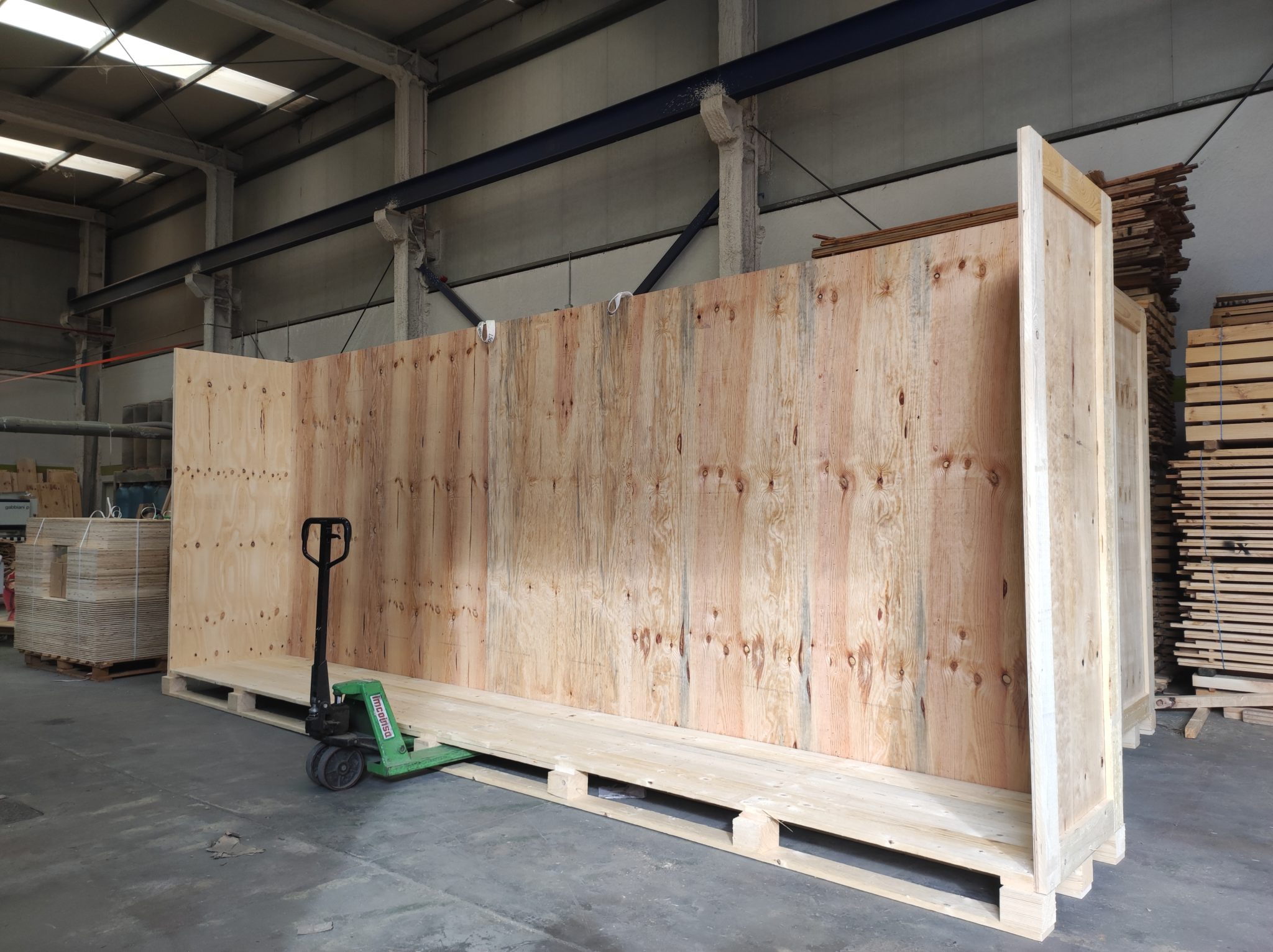
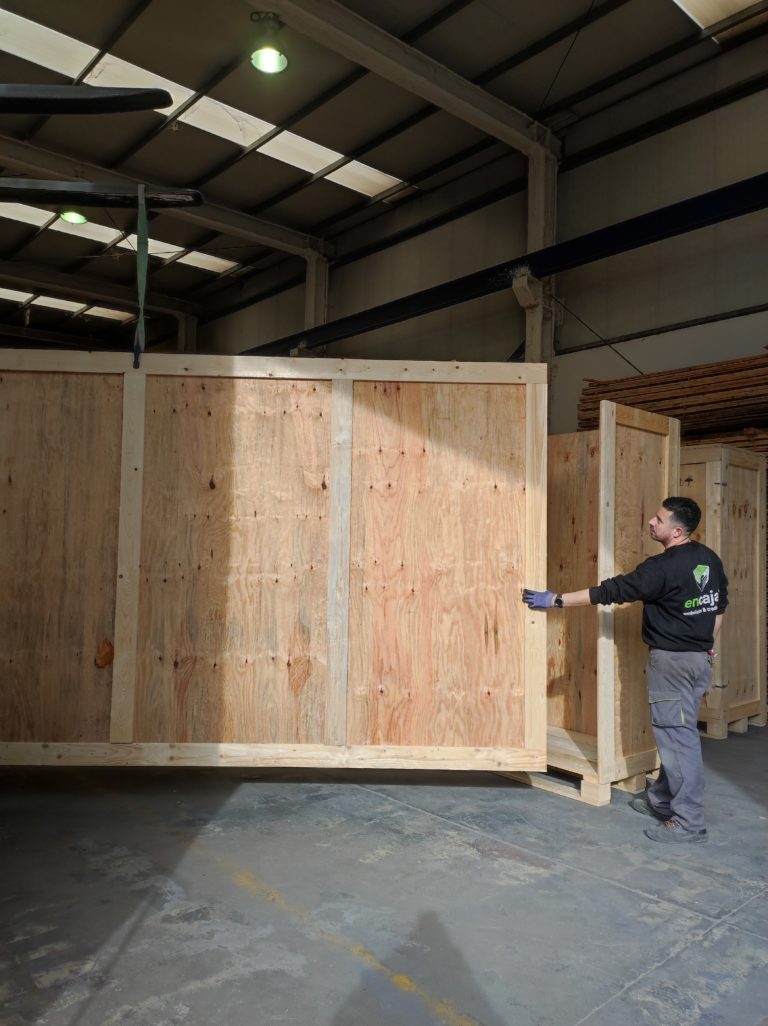
The aeronautical industry is characterized by the transport of large-volume parts that require customized packaging solutions. Among the most widespread are returnable packaging for large-tonnage equipment, which can be reused, optimizing logistics processes and saving costs.


Preliminary study and validation of packaging for large tonnage cargoes


Large-volume loads require a detailed study of protection, transport, handling and storage requirements. This involves follow-up meetings, packaging of the goods at the customer’s premises, as well as load tests until the optimal packaging is validated.


Anti-corrosion Packaging


Most of the aeronautical industry is dedicated to the manufacture of aircraft and structures, while the ancillary industry develops engines, equipment, spare parts and systems.

And structures, while the ancillary industry develops engines, equipment, spare parts and systems. For their transportation, auxiliary packaging products are needed to provide long-lasting protection against corrosion, as well as goods monitoring devices to detect possible impacts during transportation or storage.


Export Packaging


Most of the parts and components manufactured for the aeronautical industry are destined abroad. It is essential to know the international regulations and to have certified packaging for foreign trade.


Wooden packaging for aeronautical parts – phytosanitary certification

The packaging industry is basic in the distribution chain of aeronautical parts and components.

Our most commonly used packaging solutions for export, both for large volume parts and aeronautical spare parts are folding wooden crates, cages, high racks and pulp roll cradles, pallets and wooden boxes of large tonnage with wooden reinforcements as racks and diagonals, to support more load and weight than usual. This type of packaging is ISPM 15 certified.


Packaging for aeronautical parts – Use of wood


The wooden crate is disassembled, which facilitates visual inspection of the load without breaking or unnailing the side or lid. This allows the base to be used for auxiliary transports before closing the crate for shipping. And once disassembled, it occupies approximately 20% of its size, saving storage costs.

360 Eco Packaging manufactures packaging specially designed for different sectors. Consult our packaging for the aeronautical sector.


Loading

Sustainable forests to drive a greener, cleaner and more responsible economy

Forests are one of the most valuable natural resources for their social, economic and environmental benefits. Wood is also the only material that continues to absorb and store CO2 from the atmosphere for years.

For the European Union, forests are a priority. The new EU Forestry Strategy 2030 includes measures for the protection, conservation and sustainable management of forests, within the framework of the European Green Deal to curb climate change. The aim is to promote forest management practices that are more respectful of the climate and biodiversity, as well as to encourage the responsible use of wood.

Wood is a recyclable, renewable and biodegradable raw material. Qualities that fit with the principles of the circular economy. An intelligent use of forests would help to protect the environment, repopulate territories and generate employment. That is why organizations wishing to move towards a responsible economy model include in their plans the PEFC chain of custody certification, which endorses good practices along the entire wood value chain.


What is Chain of Custody?


Chain of Custody certification allows companies to label their products as coming from sustainable logging or recycling.

This certification can be done by two entities:

  • Forest Stewardship Council® (FSC®).

  • Programme for the Endorsement of Forest Certification (PEFC).

Both represent a useful tool for tracing the sustainability of any type of product made from forest raw materials, both for the companies that market them and for the consumers who buy them.

In Spain, 1,646 companies already certify their products through the PEFC forest management system and the number is increasing every year. The certified forest area has also grown, as has the number of foresters and forest owners, as can be seen in the search engine for certified areas and the search engine for Sustainable Forest Management certificates on the PEFC Spain website.


Benefits of PEFC certified Wood


Chain of Custody certification is essential for companies seeking to access environmentally and socially responsible markets or to demonstrate compliance with public or private purchasing policies that specify the sourcing of environmentally responsible materials as a requirement. For example, the European Union Ecolabel system for furniture or the LEED rating system issued by the Green Building Council in the Leadership in Energy and Environmental Design category.

The PEFC seal is key to the development of the market for sustainable forest-based products, which are increasingly in demand and gaining social recognition.


How to recognize a product of sustainable forest origin?


Consumers can identify and choose products based on a responsible forest management model. In fact, 8 out of 10 consumers prefer companies to label the sustainable forestry products they use.

A product or packaging of sustainable forest origin is distinguished by the FSC®/PEFC seal with the visible logo, accompanied by a numerical code composed of nine digits, unique to each certified company.

It is surprising to see the number and diversity of items that can be found with the FSC®/PEFC label or printed on cardboard or wood: furniture, textiles and footwear, food, hygiene products, as well as wooden containers and packaging.

As consumers, we play a decisive role in the future of our forests and the development of a greener and more sustainable economy. Turn to certified wood suppliers.

Loading

X