Transport and logistics

Case study, Use of Desiccant Salts

In the previous post we have seen what a DIN unit is and the degree of absorption per unit, therefore we must remember that a DIN unit is equivalent to an absorption of 6g of water and that to absorb these 6g of water approximately 30g of desiccant salts are necessary (depending on the type of salt and the conditions).
Desiccant Salts

Having recalled the previous post, we consider a practical case for a part of dimensions 1150x750x750mm (length x width x height) to be transported in a box equipped with a thermoweldable bag of inner dimensions 1200x800x800mm.


To calculate the volume of air enclosed between the box and the part we must find the differential of volumes, therefore:


1,2 x 0,8 x 0,8 – 1,15 x 0,75 x 0,75  = 0,121 m3


Once this data has been calculated, we go to the formula:


n = 1/a · ( V · b + m · c + A · e · D · t )

And we calculate the number “n” of DIN units replacing each constant by its value, (to know the value of these parameters do not hesitate to visit our previous post).

The result would be n = 2 approximately, so about 60g of desiccant compound would be necessary for this packaging. We must bear in mind that it is always better to distribute these salts proportionally so that the atmosphere always maintains homogeneous humidity levels, so whenever possible we will use several bags distributed homogeneously.

Desiccant Salts

As we have mentioned in previous posts, it is important to define the volume of air that we want to maintain with low humidity levels in order to calculate the number of DIN units that will be necessary. Once we know this information, our supplier will tell us the exact grams of salt that we will need depending on its composition.

Loading

Pallets, Regulatory Requirements

We begin today’s post with one of the most used elements in the packaging sector: the pallet. In this post we are going to detail the different regulatory requirements depending on the packaging needs that we can find.

pallets

In the logistics – transport – packaging sector it is common to request “certified pallets”, what does this certificate refer to?

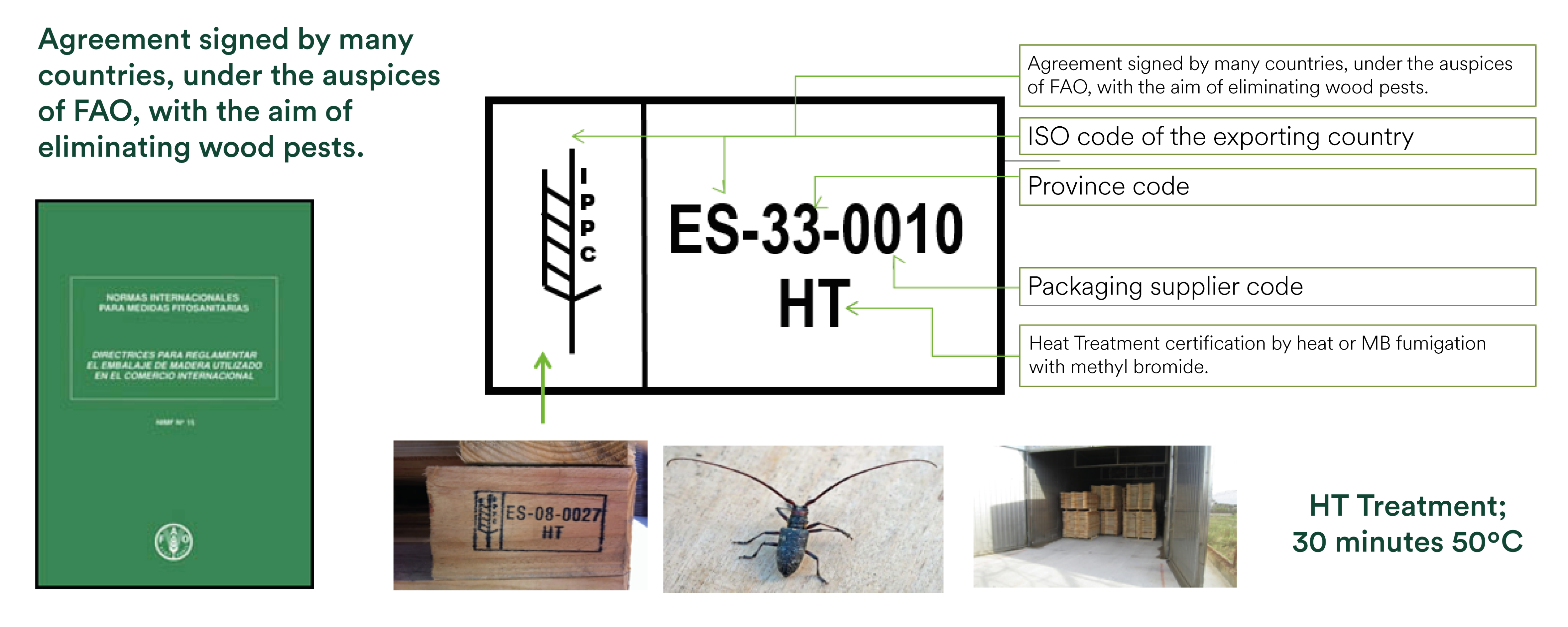
Well, this certificate usually refers to the phytosanitary certificate unless otherwise specified, this certificate as we have seen in previous posts is required in the field of international transport and must incorporate a marking on the pallet itself. This marking certifies that this pallet has received the required treatment and is suitable to be imported by a third country according to the international treaty ISPM Nº15.


An example of this marking is shown below.

ISPM15

As we have seen, this widely used packaging system is regulated by different regulations, we must identify which one is required and then select the right pallet for our needs.

Loading

Desiccant Salts

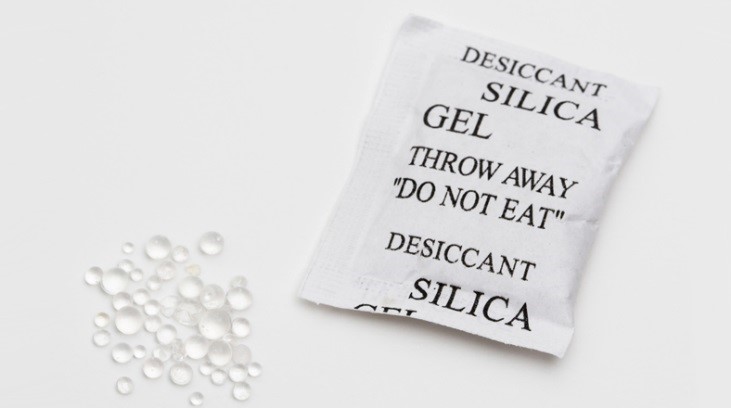
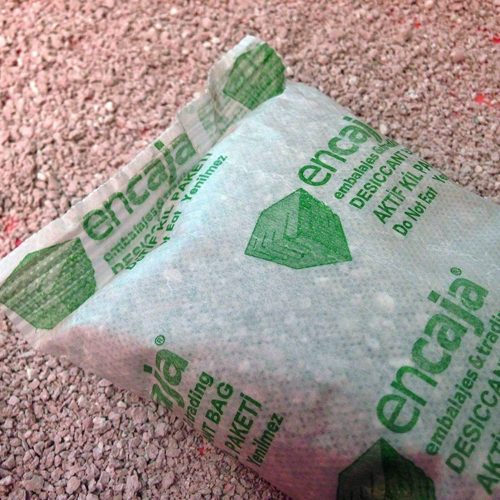
Desiccant salts, also called dehydrating salts, are chemical compounds that absorb moisture and water in very different ratios, depending on the amount of desiccants and their chemical composition, and can regenerate if subjected to a temperature above 150ºC.

There are different types of desiccant, the most common are:


  • Silica gel

These are small solid pellets of silicon dioxide obtained from sodium silicate. Despite being a chemical compound, it is not toxic or flammable by itself, although one of its components is highly toxic to humans if ingested or in contact with it for a long time, as it could cause silicosis. This is cobalt chloride, which is used to determine the amount of moisture in the gel. In this way, it causes the gel to change color when wet, varying from blue (dry) to pink.

Desiccant Salts
  • Bentonite

Is a very fine-grained (colloidal) clay of the montmorillonite type containing bases and iron. The name derives from a deposit found at Fort Benton, USA. The particle size is less than 0.03% of the average grain size of kaolinite.

Desiccant Salts
  • Calcium chloride

In addition to its use in pharmaceuticals and food, this compound is used as a desiccant, given its moisture-absorbing qualities. It is less common than silica gel, although it does not contain toxic elements and has a higher degree of moisture absorption. The problem is that it is not advisable to use it in spaces that are not hermetically sealed, since it runs the risk of liquefying, with the consequent elimination of its absorption capacity.

Desiccant Salts

Measures


There are four different units for measuring desiccants. The most commonly used due to their standardization are grams, but we also find NFH, DIN units and MIL units.

These would be the equivalences between them, taking as a reference the most used measurements:

Equivalency table

We recommend the use of one half kilo bag (16 DIN units) of desiccant or dehydrating salts per cubic meter. As a guideline, we can indicate that for a 20 feet container it is advisable to use 20 bags of 1 kg. These data are estimates since, depending on the cargo to be transported (sensitivity to oxidation and/or corrosion mainly), the proportion of salts should be adjusted to maintain the relative humidity at the established rates.


Packaging


The desiccant can be purchased in bulk or packaged in breathable bags for use in containers or inside packaging.

The bags are made of non-woven textile so that moisture passes through them and can be picked up by the compound. Now, certain desiccant manufacturers have begun using another material called Tyvek, which is used primarily in home and building construction to prevent moisture.

This material is made of high-density polyethylene and nonwoven olefin fiber, so it is highly breathable and its uses are very diverse. Although it looks like paper, we must not forget that it is plastic when it comes to recycling.

As we mentioned at the beginning of this section, desiccant bags are frequently used in containers for shipping goods by sea.

Salt compounds and moisture can cause damage to the goods. For this reason, many containers come with special cables or rings for the placement of desiccants.

In this case, a hook or hooks, usually made of plastic or metal, are added to the bags to attach them to the walls of the container. If the container has no means of hanging the bag, many manufacturers incorporate a special adhesive to attach the bag directly to the inner side walls.


Other remarks


There is a chemical compound called dimethyl fumarate, DMF, which is also used as a desiccant.

Years ago the Finnish doctor Tapio Rantanen discovered that it can cause severe allergic reactions and large skin eczema, even in very small proportions, after the marketing of this product in sofas by a Chinese company, with the aim of preventing the furniture from deteriorating with humidity, resulting in several cases of affected people in several countries around the world, including Spain.

For this reason it is very important to make sure that the desiccant that we are going to use is free of this substance and that it has passed the pertinent controls that indicate it.

It is also common to find in the desiccant packages cards indicating the moisture content of the salts, thus warning if it is necessary to replace the package in case they no longer absorb water vapor.

Indicator cards

These cards work by changing color, in such a way that when their blue color disappears and turns to a light pink, as in the case of silica gel, it means that the desiccant salts have already exhausted their absorption capacity.


In conclusion, you will have to choose the type of desiccant that you believe convenient and in the right measure depending on the volume of the load and how it is packed. It is always advisable to use it, since humidity is present everywhere and in certain regions and countries more than in others, but above all it is an indispensable requirement for sea and river transport, combining it with other types of materials for adequate protection.

Loading

Packaging for Exporting Automotive Products

Packaging represents a strategic factor in the supply chain. Even more so in times of uncertainty like the ones we are living in.

Automotive companies and the ancillary industry know that optimizing their investment in packaging reduces costs, time and storage space. A key aspect considering the difficulties the sector is going through due to the shortage of microchips, the war in Ukraine and the rising cost of energy.


Packaging solutions for the automotive industry

The automotive industry works with tight deadlines. It is crucial that all components in the chain arrive on time and in perfect condition at the assembly line.


Custom Packaging

Automotive manufacturers’ vehicles are made up of parts with different weights, volumes, shapes and sizes. At 360 Eco Packaging we design each packaging according to the type of part to be protected, the means of transport and destination, incorporating as many as possible in order to optimize the logistics process to the maximum.


Protections and packaging for batteries


Parts in the automotive sector are delicate. The dashboards and windows must be protected against possible impacts or vibrations during transport. Different auxiliary means are usually used to secure the goods, technical foams or corner protectors, which allow each part to be immobilized, preventing them from colliding with each other or moving during shipment.

Bulky parts such as engines or bodywork may require special packaging, such as heavy-duty crates or shrink wrap, which adapts to the contours of the cargo. Batteries and electrical components are considered dangerous goods and require special transport conditions. We are currently participating as a member of the CTN 192 SC 03 Subcommittee (UNE/ISO) in the development of a new regulation in the field of transport of dangerous goods, together with AENOR and the Ministry of Industry.


Packaging for the automotive and railway industry


Automotive components are not usually manufactured in one place, but arrive at the assembly line from different origins and suppliers.

Our automotive export packaging is made of ISPM 15 certified wood for international trade and transport of dangerous goods (ADR, IMDG, RID, IATA) to any destination in the world.

Our high quality reusable boxes can reach a resistance of up to 1,200 kg. Assembly and disassembly is done without the need for nails or tools, quickly and safely. And once disassembled, it takes up 20% of its size, saving space and storage costs.

Considering that many international shipments are subject to customs inspection, it is a very useful system that can be opened and closed in the same way without damaging the box, saving time and hassle.


Since our beginnings in 360 Eco Packaging we have been linked to the automotive and railway sector, working with renowned companies that rely on our experience. Check here our packaging and protection solutions for the automotive sector.

Loading

What is the most suitable packaging for transporting Solar Panels?

Demand for solar panels is experiencing strong growth in the European market as a result of rising electricity and gas prices. In Spain, solar energy grew by 37% in 2021 compared to the previous year. And everything points to this trend consolidating thanks to the aid plans for self-consumption, the agility in installation licenses and greater environmental awareness.


Packaging manufacturers are no strangers to this energy transformation. For years, packaging engineering has been providing solutions for large and heavy equipment, machinery and goods that require special treatment for storage and transport, such as packaging for glass, crystal and solar panels.


Factors to consider when transporting Solar Panels


Not all goods are the same and do not need the same protection. It is important to know what type of packaging to use depending on our merchandise to protect it against external agents such as heat, humidity, corrosion or impacts that it may suffer during the journey and arrive at its destination as if it had just left the factory.


Solar panels are composed of photovoltaic cells formed by silicon wafers. Due to their nature, they require packaging that is suitable for their weight, allows stacking and incorporates protective elements that absorb possible vibrations or impacts that could compromise their integrity.


Until recently in the solar energy sector, it was common to use metal racks for the maritime transport of containerized solar panels. However, metal is vulnerable to corrosion. And these types of metal structures are often damaged by repeated use of the forklift’s claw, resulting in a shorter service life.


As a result, they have been replaced by logistical solutions that are more advantageous in terms of both safety and economic profitability.


Advantages of wood packaging for solar panels and glass


Wood is a durable material, which allows for greater customization and reusability of the packaging.

Specialized packaging for the solar industry stands out for its maximum capacity optimization, being between 5 and 7 percent higher than other packaging used in this sector. By maximizing the number of pieces per container, direct savings in transportation costs are achieved.


As in the case of glass packaging, wood packaging for solar panels complies with ISPM15 certification for international transport, and is equipped with corner protection to prevent possible breakage of parts during transport.


Another benefit is the ease of handling. As it does not use nails, it can be assembled without the need for tools, making this task faster and safer. And since all its components can be disassembled, the space it takes up after use is minimal.


Today there are customized packaging solutions that adapt to the particularities of each merchandise and sector.


Contact us for a correct choice.


Loading

Ecological Cardboard Pallets: Are they the alternative to wooden pallets?

The pallet is one of the most widely used elements in the packaging industry. Its use facilitates the handling, loading, transport and storage of goods.

Due to its resistance to support any type of load, grouping of goods and ease of handling, the wooden pallet occupies most of the market, being one of the most widely used packaging systems for export.

However, it is indisputable that wood is an increasingly scarce resource. In recent months, supply problems have led to a rise in the price of wood, which, together with a growing environmental awareness, is driving companies to look for sustainable and cost-effective packaging solutions. One such solution is the cardboard pallet.


What are the characteristics of the cardboard pallet?

The cardboard pallet is composed of corrugated cardboard sheets and solid cardboard blocks that are inserted as pillars. This manufacturing system gives it a stacking strength similar to that of a wooden pallet, since it can carry loads of over 600 kilograms.

It is also much lighter. A cardboard pallet weighs up to 10 times less than a wooden pallet. This reduces the risk of occupational accidents during handling and damage to palletized products.

Cardboard pallets are manufactured with the same dimensions as a traditional pallet, so they are suitable for use with forklifts.


What are the advantages of cardboard pallets over wooden pallets?

The demand for sustainable transport packaging has sparked interest in the cardboard pallet, especially in the food and pharmaceutical industry, where its advantages over traditional palletizing systems have not gone unnoticed:

  • Stronger and lighter than the wooden pallet. A cardboard pallet weighs between 1 and 5 kilos compared to 10-25 kilos for wood. This facilitates handling during transport and storage and reduces warehouse space.
  • It is valid for export without the use of phytosanitary treatments, which are mandatory for wooden pallets for international transport, according to ISPM15 standard.
  • Easy recycling, in any common paper container.
  • It is customizable.
  • Reduces CO2 emissions.

The search for sustainable alternatives for packaging all kinds of goods is one of the trends that will mark the packaging industry in the coming years. Cardboard packaging, and in particular the cardboard pallet, meets the requirements of quality, efficiency and recyclability demanded by an industry committed to efficient resource management and respect for the environment.

Did you know about this type of packaging? Which of its qualities do you find most interesting?

Loading

Presenting our Sustainable Packaging at Intersolar Europe

Presenting our Sustainable Packaging at Intersolar Europe

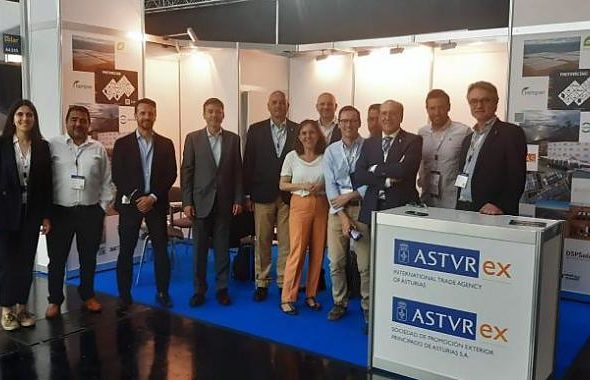
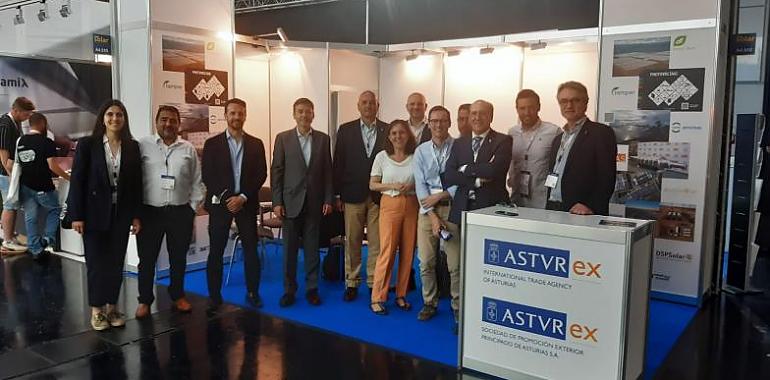
On May 11, 12 and 13, 360 Eco Packaging Encaja Embalajes had the opportunity to present its packaging solutions for the solar industry at the Intersolar Europe Fair, the most important exhibition of the sector worldwide, held in Munich (Germany).

The meeting was attended by Jesús Álvarez, commercial director, and José Ramón Novoa (ASTUREX; Sociedad de Promoción Exterior Principado de Asturias S.A.)

Our participation was possible thanks to the Sociedad de Promoción Exterior Principado de Asturias S.A. (ASTUREX), which organized a joint stand with 8 Asturian companies that supply products and services related to the solar energy value chain.

With commercial actions such as Intersolar Europe, ASTUREX contributes to a greater presence of Asturian companies in international markets.

On this occasion, among all the participating companies, we have highlighted the potential of the region as a producer of goods and services in the value chain of renewable energies linked to solar energy.

We were accompanied by: Alusín Solar S.L.U., Distribuciones Solares del Principado S.L. (DSP Solar), Duro Felguera S.A., Ingeniería y Suministros Asturias S.A., Mecanizados CAS S.A., Procinsa Energías Renovables S.L. and Temper Energy International S.L. (Temper).


As part of the fair, 360 Eco Packaging – Encaja Embalajes informed attendees about the most efficient packaging for transporting solar panels, sustainable packaging and the reusability of wooden packaging and its impact on logistics costs, as well as the specifications that this type of packaging must meet for export.


Why Intersolar Europe?

Intersolar Europe is one of the most significant events in the energy sector calendar.

The event brings together more than 50,000 visitors and around 1,500 exhibitors interested in showcasing their innovative products, solutions and business models for the energy transition and security of supply in Europe.


The importance of Sustainable Packaging at Intersolar Europe

As industrial packaging manufacturers, we remain attentive to market demands in order to offer solutions that meet the needs of the supply chains of each sector and customer. 

It has been an honour for us to present our Sustainable Packaging at Intersolar Europe.

See you at the next edition!

Presenting our sustainable packaging at Intersolar Europe

Presenting our sustainable packaging at Intersolar Europe

Loading

X