Tag Archives: logistics

Pharmaceutical product Packaging

Pharmaceutical packaging plays a fundamental role in the protection of medicines during storage and transport. Tablets, syrups, ampoules, vaccines… Everything must be packaged in compliance with strict safety requirements so that they reach the patient in optimum conditions.

In addition, the way in which medicines are administered determines the design of the packaging, which must facilitate opening and dosing.


Pharmaceutical packaging regulations

Pharmaceutical packaging is regulated by different regulations aimed at ensuring the safety and efficacy of medicines, as well as the protection of people and the environment.

In Europe, Directive 2001/83/EC determines the information, packaging and labeling that medicinal products must carry. There are also specific rules governing other aspects, such as protection against counterfeit medicines (Directive 2011/62/EU of the European Parliament and of the Council) and waste management (Directive 2008/98/EC of the European Parliament and of the Council).

Types of pharmaceutical packaging

The most common types of packaging in the pharmaceutical sector are:

Blister:

Consists of a plastic or aluminum foil containing the drug, allowing its administration in doses such as tablets, individual capsules, dragees, etc.

Bottle:

Made of glass or plastic, used for the storage of liquids and solids.

Pharmaceutical product Packaging

Which packaging is the most suitable for the pharmaceutical sector?

Pharmaceutical products are a delicate type of goods, which require special control conditions during the whole packaging process. Therefore, a pharmaceutical packaging must be able to keep the medicines intact throughout the entire supply chain.

For example, using opaque materials that protect it from light, that act as a barrier to water vapor and oxygen, and with a correct sealing and immobilization that prevents degradation or overturning of the product.

In this sense, corrugated cardboard boxes on wooden or cardboard pallets are an interesting option, because they are suitable for both storage and transport of this type of merchandise.

They are also compatible with the standardized European and American palletizing systems and, as they are certified with the ISPM -15 phytosanitary seal, they are suitable for export.

In addition, auxiliary fastening systems such as strapping help to keep the goods securely fastened. Likewise, desiccant salts absorb the humidity inside the packaging during transit.

Pharmaceutical product Packaging

Sustainable pharmaceutical packaging

Pharmaceutical packaging is constantly evolving. Innovation, sustainability and safety set the trends in the sector.

Environmental impact is another of the challenges facing the industry. In the area of primary packaging, the first steps are being taken in the manufacture of recyclable paper blister packs.

Regarding secondary and tertiary packaging, 360 Eco Packaging has been developing sustainable packaging for years, using reusable and recyclable materials. All this together with an optimization service aimed at helping companies implement more efficient logistics, with lower energy consumption and less impact on nature.

Contact us.

Loading

Main packaging certifications

Certifications are key indicators in any activity. Through these accreditations, packaging manufacturers can demonstrate that their products or services comply with the regulations required by transport agreements, and at the same time meet high standards of safety, quality or environmental responsibility. They are, therefore, a guarantee of how we do things.

ISO 9001 certification is one of the most widely implemented standards among companies. In our case, this seal accredits the quality of our processes for the design and manufacture of industrial packaging.

In the packaging field there are other valuable rules and certifications that we highlight below:

Phytosanitary-certified wood packaging material

The International Standard for Phytosanitary Measures ISPM-15 was created by FAO to regulate wood packaging in international trade in order to reduce the risk of introduction and spread of pests.

The ISPM 15 seal is based on a heat treatment that consists of the wood reaching 56 ºC in its core for at least 30 continuous minutes.

       Once the wood has been treated, the mark must be visible on at least two opposite sides of the wood.

The ISPM-15 standard affects packaging made wholly or partially from raw wood, such as pallets, crates, crates, crates, crates, dunnage, pallets, cable drums and reels. Plywood is excluded.

To obtain the ISPM-15 label, it is necessary to be registered in the national system and to pass the required annual audits, through the control of the traceability of the manufactured elements.

The issuance of a certificate will only be necessary if required by the phytosanitary protection agencies of the destination countries.

ISPM15

Certified Dangerous Goods Packaging

Dangerous goods are considered to be solid, liquid or powdered products that represent a risk to the safety and health of people or the environment.

The transport of dangerous goods requires specific approved packaging, with its corresponding certificate in accordance with the regulations of each mode of transport. The regulation par excellence in the transport of dangerous goods by road is the ADR (European Agreement concerning the International Carriage of Dangerous Goods by Road).

Compliance is also mandatory:

  • Rail RID (Regulations concerning the International Carriage of Dangerous Goods by Rail).
  • Air transport IATA (International Air Transport Association).
  • Maritime transport IMDG (International Maritime Dangerous Goods Code).

The UN has established a universal system of classification, packaging, marking and labeling of the different dangerous goods valid for all modes of transport.

Dangerous goods packaging can be made of plastic, cardboard or metal, but must always be properly labeled. In addition to the labeling required for each type of goods, according to its classification in the ADR, each package must show a UN number, among other data such as the manufacturer’s code, type of box, password, country and year of manufacture.

The ADR defines packing instructions for each UN number, according to which the physical-chemical specifications that the packaging must meet for a given good will be detailed.

Packaging with PEFC / FSC® certification

Nowadays, it is impossible to talk about quality without taking environmental criteria into account. PEFC and FSC® chain-of-custody certification guarantees good practices along the entire wood value chain.

PEFC-certified pallets, wooden crates and cardboard boxes use raw material from sustainable logging, recycled material or both. Choosing PEFC / FSC® certified packaging means promoting a responsible supply chain, contributing to sustainable forest management and the well-being of forest communities.

PEFC
FSC

These seals are also a competitive advantage in markets that require the supply of environmentally responsible materials.

Use certified packaging suppliers that add value to your logistics.

Loading

Safe transport of Lithium Batteries

Our cell phones, electronic devices and electric vehicles are powered by lithium batteries, a source of energy that is increasingly present in our daily lives. 

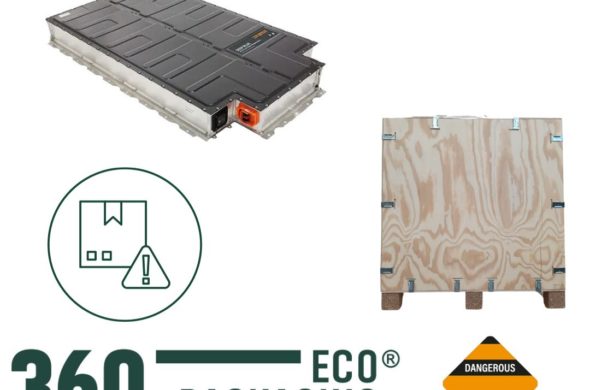
By their nature, lithium batteries are considered dangerous goods, and as such require approved packaging to avoid potential risks during handling and transport, both for people and the environment. As certified and approved manufacturers of this type of packaging, we want to show in this post the high importance of storage and transport of this type of product.

Lithium battery regulations

All dangerous goods must comply with specific regulations and warnings, and batteries are no exception.

First of all, lithium batteries contain high levels of electrical energy, which makes them prone to overcharging, extreme temperature, short circuit and mechanical damage. Therefore, improper use or storage could lead to fires or explosions such as the one that occurred on the Felicity Ace cargo ship in 2022, with more than 4,000 luxury cars on board.

Therefore, manufacturers and intermediaries must use approved packaging, which complies with the regulations of the chosen means of transport, whether by land, sea or air. That is:

  • Land:

European Agreement concerning the International Carriage of Dangerous Goods by Road (ADR).

  • By Air:

International Civil Aviation Organization (ICAO) Technical Instructions (TI) for the Safe Transport of Dangerous Goods by Air and the International Air Transport Association (IATA) Dangerous Goods Regulations.

  • By Rail:

International Carriage of Dangerous Goods by Rail (RID).

  • By sea:

International Maritime Dangerous Goods Code (IMDG).

lithium batteries

Packaging of lithium batteries

Secondly, there are a number of considerations to take into account when looking for solutions for handling and transporting batteries.

  • Heat resistance: use materials resistant to high temperatures.
  • Insulation: each battery must be individually insulated in its own compartment or container to avoid short circuits and shocks that could damage it.
  • Avoid contact with metals: lithium batteries should not come into contact with metal objects, as this could cause short circuits. They should be separated from each other by non-conductive insulators, such as polyethylene or plastic foams.
  • Hazard statements: use the correct labeling according to the applicable transport regulations.
  • Stability: by means of protection and fastening elements that guarantee their safety. The heavier the battery, the more support it needs.

Identification and labeling of packaging for lithium batteries

The packaging of lithium batteries must also be provided with labels and information warning of the risks of handling and transport:

The class 9 identification label, model 9A, is mandatory.

The UN number, which identifies the material from four digits. The identification codes for the different types of batteries are:

Lithium-ion batteries UN-3480.

Lithium-ion batteries UN-3481 included or packaged in a device.

Lithium metal batteries UN-3090.

Lithium metal batteries contained or packaged in a device UN-3091.

The homologation password indicating the material, country, year of manufacture and manufacturer’s code.

In conclusion, please consult here without obligation our approved solutions for the storage of lithium batteries, individual or integrated in equipment, for each mode of transport.


Also in our usual communication channels: info@360ecopackaging.com and on the phone (+34) 699 239 392

Loading

Securing loads with Airbags

When determining the right packaging, many aspects must be taken into account. One of them is the fixation and adjustment of loads. For this purpose, multiple systems and pneumatic elements are used to ensure that our shipment arrives in optimal conditions.

One of the most commonly used are dunnage bags or airbags for packaging.

Securing loads with Airbags

What are packaging airbags?

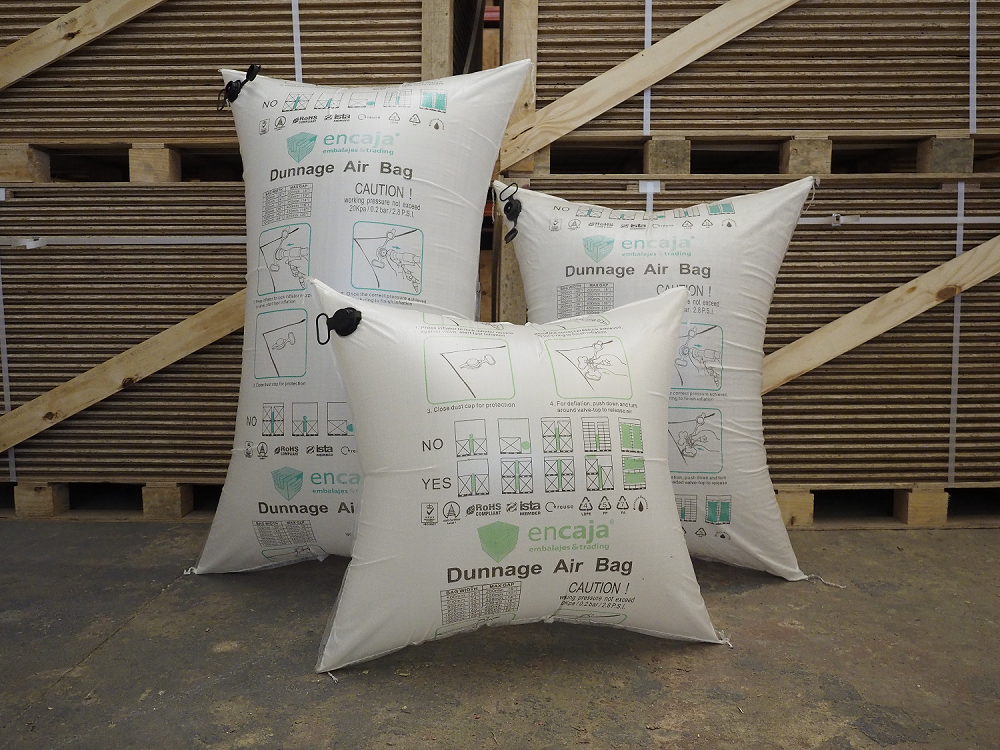
Packaging airbags, dunnage bags or inflatable bags are used to protect goods during transport. Their function is to fill the empty spaces between the cargo or between the cargo and the walls of the transport unit, keeping it immobile in order to reduce the possibility of damage during transport.

These bags are very easy to use. They are filled with air through a valve to the required pressure. Airbags are available in different sizes, depending on the use and load.

Securing loads with Airbags

Which airbag do I need to protect my cargo?

Airbags can be used in land, sea or rail transport. To know what type of airbag we will need, the first thing we must know is the volume and weight of the cargo to be transported (to define the working pressure of the airbag), as well as the operating time of this airbag. Once these parameters have been set, we will check the manufacturer’s technical data sheet to see if it adapts to our needs.

Most manufacturers comply with the AAR Bulletin No. 9 (Association of American Railroads), the most widespread international standard, which classifies these pneumatic elements into 5 levels, according to the type of transport and the operating pressure.

Securing loads with Airbags

As shown in the table, the different types of transport are classified according to the working pressure. This is because this standard contemplates pressure tests after 19 days, allowing a load loss of no more than 1psi. In other words, for long transports we must generally use level 2 airbags or higher (more working pressure).
Once we have defined the type of air bag we need, we will have to design a system of loads as homogeneous as possible, using these elements to adjust the loads.

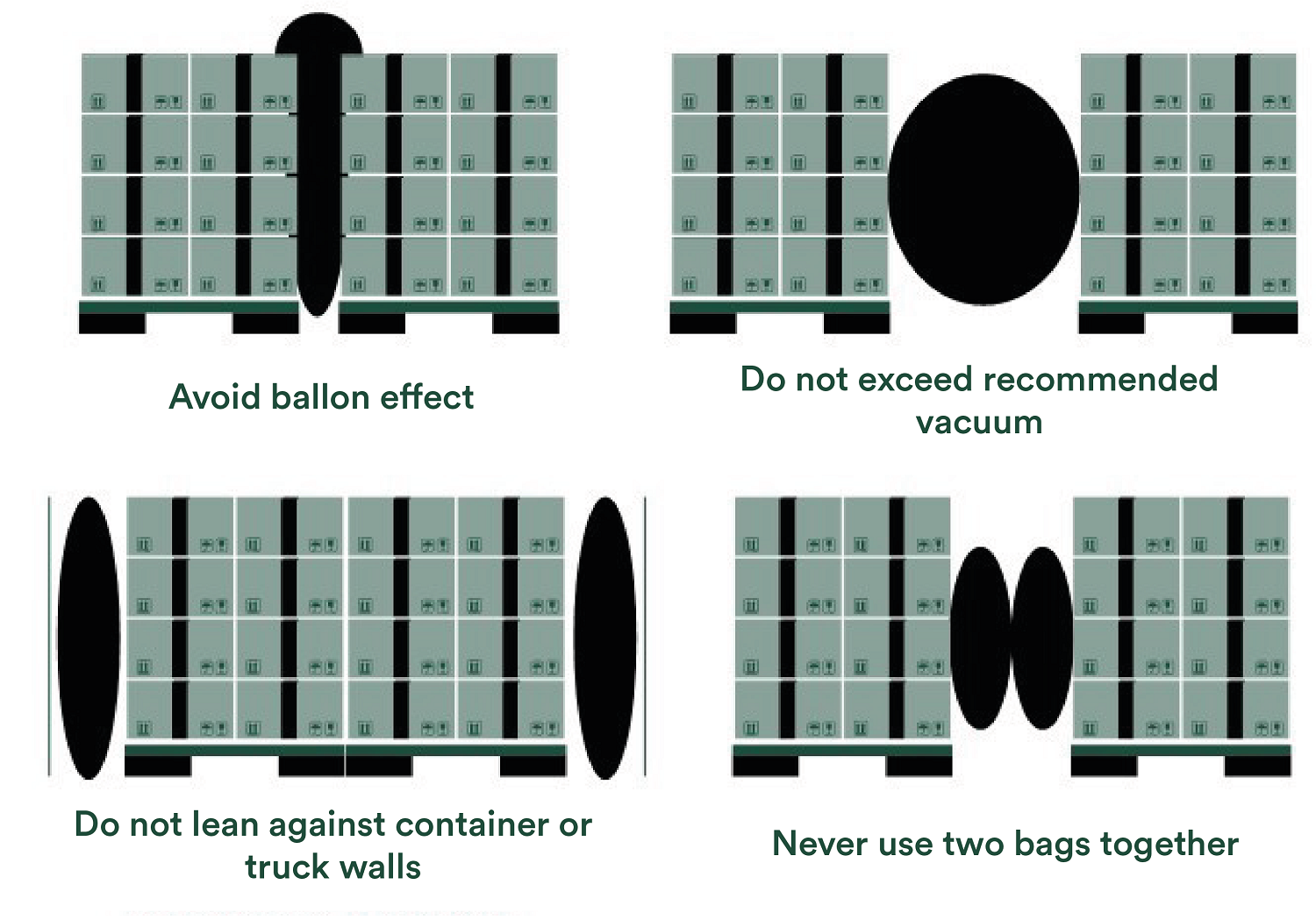
To do this, we can take into account the guidelines of the CTU 2014 code, which, among other issues, details the different misuses that can occur when applying this system.

Securing loads with Airbags

Types of airbags and characteristics

They can be made of different materials, depending on their resistance to external agents in case of possible rupture.

There are basically two types, depending on the material they are made of:

  • Raffia:

These are bags or sacks consisting of an inner layer of polyethylene and a top layer of raffia, a type of elastic fabric widely used for packaging due to its resistance.

  • Kraft paper:

They have an inner layer of polyethylene and a top layer of Kraft paper reinforced with polypropylene to prevent tearing.

In both cases, they are durable, reusable and waterproof, providing an efficient solution to protect cargo during transportation.


If you need advice, consult a reliable supplier to help you choose the best option.

Loading

What is Just in Time logistics?

The world is constantly evolving. The changes that are taking place have an impact on supply chains. Industrial packaging manufacturers have to respond to the challenges posed by different logistical operations, however complex they may be, in times of greater or lesser uncertainty.

One of them is Just In Time manufacturing, which orients production to demand.

What is the Just in Time method?

The Just in Time production method is based on real orders. It consists of producing the exact amount of what is required, in the right place at the right time, without wasting system resources.

Just in Time logistics

Its origin comes from Japan. In the mid-twentieth century, large Japanese companies were looking for more efficient production systems, which in turn would allow them to reduce factory inventory. Toyota was the first company to apply the Just in Time method, under the name of Toyota Production System, in automobile manufacturing plants, with the aim of eliminating from the production process those elements that did not provide real value.

Since then, automotive companies, technology companies, fast food chains around the world and today, e-commerce companies use this model to make their processes more efficient, optimize costs and respond better and faster to customers.

Just in Time logistics

What are the advantages and disadvantages of the Just in Time method in logistics?

  • Zero defects: an error can cause delays and increase stocks.
  • Zero breakdowns: this implies scheduled maintenance of work tools.
  • Zero stocks: this generates storage and space costs.
  • Zero lead times: reducing production cycles reduces waiting times, equipment preparation and transit times.
  • Zero paperwork: reducing bureaucracy to a minimum.

Applying this method provides better management, greater flexibility and savings, but requires millimetric coordination in all the links that make up the supply chain.

Just in Time logistics

Advantages of JIT

  • Reduces inventory levels and costs associated with purchasing and warehousing, since only what is in demand is manufactured.
  • Minimizes losses, obsolete products, expired products or products that lose value when stored, by having a minimum stock.
  • Reduces time and unnecessary trips to locate the merchandise.
  • It favors a closer relationship with suppliers.


Disadvantages of JIT

  • Possible delays and lack of supplies.
  • Less access to special prices for small-scale purchases.
  • Increased costs when changing suppliers.
  • Scarce capacity to react to demand peaks.
Just in Time logistics

Packaging for Just in Time logistics

As with all other supplies, packaging in JIT operations must be available when it is needed. Companies specializing in this type of packaging must be able to offer packaging solutions that help simplify operations and speed up delivery times, that are easy to handle and help reduce storage costs.

This logistics requires ergonomic packaging, which allows assembly/disassembly in a very simple and safe way, folding solutions, which facilitate internal movements and save space, as well as customized packaging, which optimizes the logistics process to the maximum.


Contact us. At 360 Eco Packaging we can help you find the best packaging or storage solution for your Just in Time operations.

Loading

Packing for moving

Nobody is aware of what they have until they have to move, that is why in this post we will talk about packing for moving. Moving our belongings from one place to another requires good planning, starting with choosing the optimal packaging so that the move is resolved quickly and smoothly.

Like any other type of shipment, each move will require different packaging, depending on the contents to be transported and the mode of transport.

Packing for moving

What is the most suitable packing for a move?

The packaging systems for the moving or furniture storage sector share the following characteristics:

Packing for moving

Types of packaging for moving

No two moves are the same. Moving a house is not the same as moving an office where electronic equipment and components are moved, much less a transoceanic move in a container.

Depending on the volume of material to be transported, wooden, cardboard or cardboard combined with wood packaging solutions can be used.

The most common are:

Cardboard boxes

Cardboard boxes are the most common type of packaging used in removals. As is logical, boxes of different sizes are used, depending on the needs. From a weight of 8 kilos upwards, it is advisable to use two-channel cardboard boxes, which offer greater resistance and protection.

Large-volume cardboard boxes, available with flaps or lids, are used to move large furniture and belongings.

Packing for moving

Folding wooden boxes

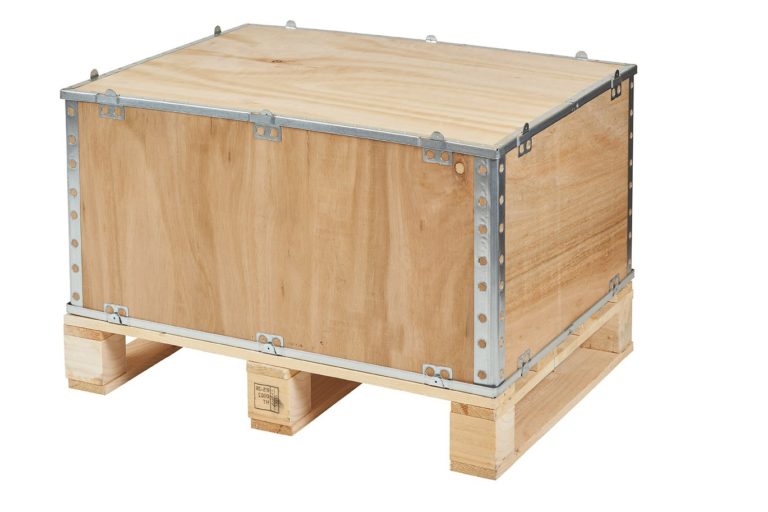
Plywood transport crates with lids are the most commonly used for transoceanic moves. This type of box is made of ISPM15 certified wood, so it is suitable for international shipments.

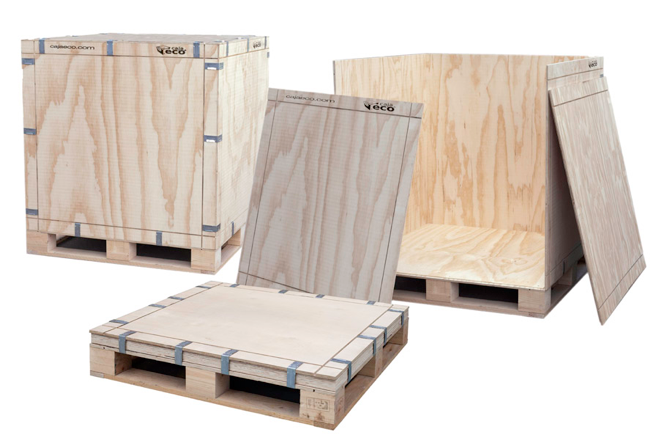
It is a reusable, stackable and collapsible box. It consists of a lid, a base with support and a very consistent central body. The anchorage of the pieces is by means of metallic tabs, which gives it great resistance.

Packing for moving

Fillings to protect the inside of the boxes

Just as important as choosing the most suitable box for a move is to have protection and padding aids to protect the contents inside.

Packing padding products immobilize objects to prevent them from suffering any impact during transportation and protect them from humidity or vibrations so that they arrive at their destination in perfect condition.

An economical solution to protect ceramic pieces, glassware or fragile products, as well as to fill the gaps left in boxes, is cardboard netting.

Cardboard corner protectors and foam profiles are essential to protect the edges on the inside and outside of the boxes.

In international moves, and especially in sea transport, inflatable bags or airbags are used as a complementary system in cargo lashing to fill the gaps in containers and prevent them from moving.

Packing for moving

At 360 Eco Packaging we can’t move your things, but we can provide you with the necessary packing material to make your move as safe as possible. Contact us.

Packing for moving

Loading

Mechanical Impact Detectors

There are two types of impact detectors: mechanical and electronic.

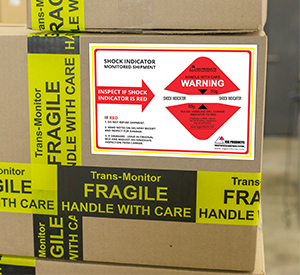
This time we will focus on mechanical devices, they are the most used and the most affordable due to their simple architecture. They are capable of detecting impacts on one or more axes and there are tared models with different g-force sensitivities.

Mechanical Impact Detectors

Therefore, we can classify these detectors as:


One-dimensional

Mechanical detectors that capture accelerations in only one axis (one direction and two directions).

These detectors are the most commonly used, there are sticker type (with adhesive) that are easily anchored to the packaging to be controlled.

Mechanical Impact Detectors

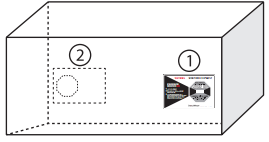
Their placement is generally:

  1. For a box with a side-to-side proportionality of approximately 1:1
Mechanical Impact Detectors

2. For a box with approximate side-to-side ratio > 2:1

Mechanical Impact Detectors

3. The heights “h” at which the indicator should be positioned may vary depending on the load, the g-force and the manufacturer.

Most of these indicators are activated by changing color (red) when the maximum set acceleration has been exceeded, it does not show a history of events, for that an electronic detector would be necessary.


Two-dimensional


Mechanical detectors that capture accelerations in two axes (two directions with their two senses).

These detectors are capable of detecting impacts in two directions and even show the direction, sense and modulus of the maximum force to which the load was subjected as shown in the above simulation (provided it is within the operating range of the detector).

Mechanical Impact Detectors

Their placement is generally done by means of four screws (per detector) and unlike the one-dimensional ones, their location in the case does not generally interfere in the operation.

There are two main types: magnetic and combined sphere-spring system.

Both are two-dimensional and allow the working accelerations g to be adjusted (depending on their type of construction).

Loading

Cardboard, a strategic packaging for the Circular Economy

In a Circular Economy model where waste becomes a resource, the paper and board industry has a key role to play.


We know that the future of packaging involves incorporating sustainable materials, reducing the ecological footprint associated with its production and use, and that its waste can be revalued, without neglecting the purpose for which it is designed: to protect the product. In this future, cartonboard packaging will be a priority.


Cardboard as a sustainable packaging material


Cardboard is a natural, renewable, recyclable and biodegradable material. In recent years, it has been replacing other traditional packaging materials such as plastic.

Cardboard, a strategic packaging for the Circular Economy

Paper and cardboard fibers are also much stronger than previously thought. It has been shown that fiber-based packaging material – paper, cardboard, paperboard and folding cartons – can be recycled more than 25 times, retaining their mechanical properties for re-integration into the production process.

This makes it one of the most sustainable materials in the packaging sector and one of the preferred packaging solutions for the consumer.

Cardboard, a strategic packaging for the Circular Economy

Why is cardboard packaging preferred by consumers?


The way companies package their products is a matter of concern for consumers, influencing their purchasing decisions.

The European Association of Carton and Cartonboard Manufacturers reveals that 4 out of 5 consumers prefer cartons to plastic. In its report, it says that more than half of the consumers surveyed in Spain claim to have switched brands because the packaging was not recyclable or because they used unnecessary packaging. It adds that 82 percent would be willing to pay more for environmentally friendly packaging.

Cardboard, a strategic packaging for the Circular Economy

Most commonly used carton packaging

For companies interested in incorporating circularity into their packaging, cardboard packaging represents a zero-waste system of significant social, economic and environmental value.

Because of its versatility, it can be used throughout the packaging chain:

  1. Primary packaging, which is directly in contact with the product.

  2. Packaging for Ecommerce.

  3. Cargo units for storage and transport of consumer goods.

  4. Protective elements, such as interior fillers to pack merchandise shipments, or corners to avoid friction during transport.

The most commonly used cartons are:

Corrugated cardboard boxes

Can be used in standard size or large volume for packing and palletizing light and heavy goods. They are foldable, which facilitates storage, reducing space.


Pallet boxes

They are corrugated cardboard boxes placed on a wooden pallet or cardboard. Its use as commercial exhibitors has been extended by its profitability, since they serve both as product container shelf and advertising support, because the cardboard can be easily printed and incorporate gaps or shelves to place the product.


The cardboard pallet

Consists of corrugated cardboard sheets and solid cardboard blocks that are inserted as pillars. Resistant and lighter than the wooden pallet, it is also valid for international transport, without having to undergo phytosanitary treatment.


The road map to a Circular Economy is written on cardboard.


Contact us if you are interested in adding reusable packaging to your logistics.

Loading

Clipping Crate (Features)

We have been reviewing different packaging products that help us to preserve and transport our goods in perfect condition, all of them for sale in our company.

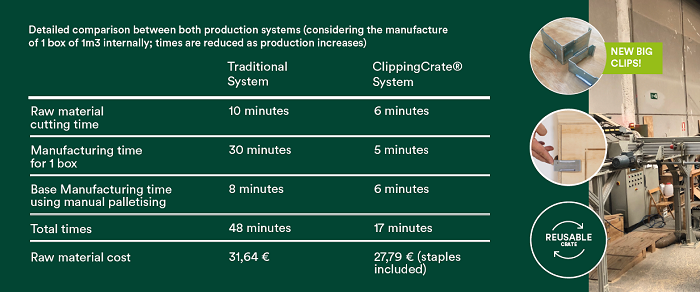
For this reason, today is the turn to talk about our flagship product, the Clipping Crate. A reusable, economical, easy, waterproof box with an innovative design: the packaging of the present and the future.

After years of research, what started as an idea came to life and became a serious project to improve the wood packaging sector as we knew it. Gone were the bulky boxes built with nails, difficult to move and of great volume and weight.


What is the Clipping Crate?


360 Eco Packaging is one of the first European companies to have patents in the packaging sector, one of them is the Clipping Crate, the first with fastening system by staples or galvanized zinc clips, which provide strength and flexibility. In this way, a single person can assemble and disassemble the box without the help of tools.

Clipping Crate (Features)

How does it work?


It facilitates the packaging of products difficult to move, especially when it comes to goods with a lot of weight and volume, since, once placed on the base, it is only necessary to place the corresponding sides and lid securing them with staples, easy and fast wood.

Since many international shipments are opened for customs inspection, it is a useful tool that can be opened and closed in the same way without damage to the box or nails to be nailed and uncoiled, saving time and worries.

Clipping Crate (Features)

Why do I save with Clipping Crate?


Being a detachable box, it saves logistics costs, since it takes up less space, either for transport or to be stored. It is not necessary to have a large amount of free space for storage until its reuse and, in terms of transport, costs are greatly minimized, since the height of the folded and palletized box decreases.


What size boxes have?


The Clipping Crate is standardized, which means that we have a wide range of measures in stock to cover any need, without forgetting that each packaging is unique and, In the same way, the customer who wishes can request your customized Clipping Crate with the measures you need.

Foldable wooden Clipping Crate (Features)

Can it be reused?


The Clipping Crate, for its strength and durability, can be used again, although the number of reuses is subject to the material of the box (plywood, OSB or chipboard) and to the use that is granted at all times.


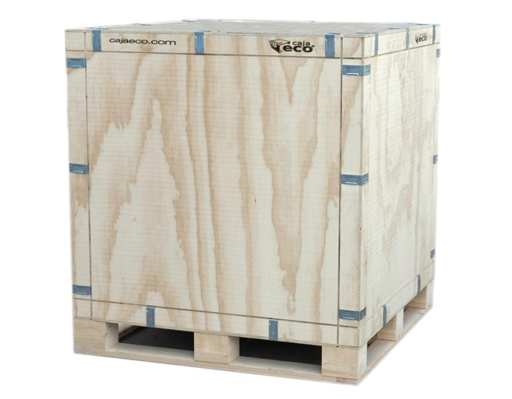
Made of 15 mm plywood for the sides and 12 mm for the cover and base, makes up the high range of our product to be the most resistant.

Clipping Crate (Features)

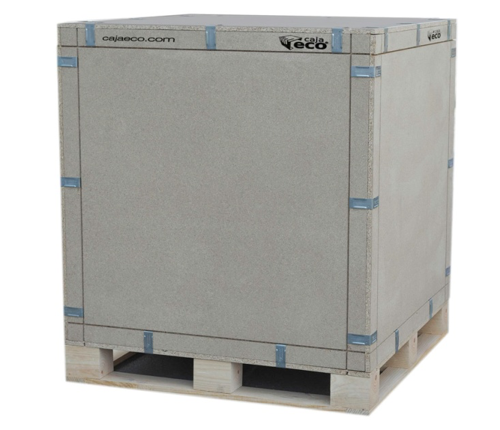
Made of chipboard, is the most economical and has the least capacity for reuse. Its sides, lid and base are 15 mm thick.

Clipping Crate (Features)

Made of OSB 15 mm for the sides and 12 mm for the lid and base, is the standard quality-price product, since this material, in addition to strong, is economical, so it represents the best alternative to obtain the highest quality at the lowest price.

Clipping Crate (Features)

What does it mean that the box is eco-friendly?


The wood we use for our boxes comes only from sustained felling. In this way, we help to stop the indiscriminate felling of trees, protecting the environment. It has the distinctive international PECF that guarantees the correct environmental management of the forests from which it comes. In addition, our commitment is to plant one tree for each Clipping Crate supplied.

Not only that, but thanks to its reuse and the replacement of damaged parts, we contribute to consuming less wood, a material that is also easily recyclable.


Soon we will have a new post with more information about our flagship product the Clipping Crate.

Loading

Happy Easter Holidays!

Happy Easter holiday!
We will return next week with more energy, more information about our packaging products, photos, content and the most outstanding news about the sectors of interest of the industry.


Joyeuses vacances de Pâques!
Nous reviendrons la semaine prochaine avec plus d’énergie, plus d’informations sur nos produits d’emballage, photos, contenus et les nouvelles les plus remarquables sur les secteurs d’intérêt de l’industrie.


Boas férias de Páscoa!
Voltaremos na próxima semana com mais energia, mais informações sobre nossos produtos de embalagem, fotos, conteúdos e as notícias mais marcantes sobre os setores de interesse da indústria.


Loading

X