Tag Archives: packaging

What is the most suitable packaging for transporting Solar Panels?

Demand for solar panels is experiencing strong growth in the European market as a result of rising electricity and gas prices. In Spain, solar energy grew by 37% in 2021 compared to the previous year. And everything points to this trend consolidating thanks to the aid plans for self-consumption, the agility in installation licenses and greater environmental awareness.


Packaging manufacturers are no strangers to this energy transformation. For years, packaging engineering has been providing solutions for large and heavy equipment, machinery and goods that require special treatment for storage and transport, such as packaging for glass, crystal and solar panels.


Factors to consider when transporting Solar Panels


Not all goods are the same and do not need the same protection. It is important to know what type of packaging to use depending on our merchandise to protect it against external agents such as heat, humidity, corrosion or impacts that it may suffer during the journey and arrive at its destination as if it had just left the factory.


Solar panels are composed of photovoltaic cells formed by silicon wafers. Due to their nature, they require packaging that is suitable for their weight, allows stacking and incorporates protective elements that absorb possible vibrations or impacts that could compromise their integrity.


Until recently in the solar energy sector, it was common to use metal racks for the maritime transport of containerized solar panels. However, metal is vulnerable to corrosion. And these types of metal structures are often damaged by repeated use of the forklift’s claw, resulting in a shorter service life.


As a result, they have been replaced by logistical solutions that are more advantageous in terms of both safety and economic profitability.


Advantages of wood packaging for solar panels and glass


Wood is a durable material, which allows for greater customization and reusability of the packaging.

Specialized packaging for the solar industry stands out for its maximum capacity optimization, being between 5 and 7 percent higher than other packaging used in this sector. By maximizing the number of pieces per container, direct savings in transportation costs are achieved.


As in the case of glass packaging, wood packaging for solar panels complies with ISPM15 certification for international transport, and is equipped with corner protection to prevent possible breakage of parts during transport.


Another benefit is the ease of handling. As it does not use nails, it can be assembled without the need for tools, making this task faster and safer. And since all its components can be disassembled, the space it takes up after use is minimal.


Today there are customized packaging solutions that adapt to the particularities of each merchandise and sector.


Contact us for a correct choice.


Loading

Types of Returnable Packaging III: Plastic Packages

As we told you a few days ago, during this month in the blog, we talked about the different types of returnable packaging that exist.
In this post, we define plastic returnable packaging whose purpose is optimal for transportation and storage over long periods of time.


The logistics industry is beginning to clearly perceive the advantages of using returnable transport packaging systems.

Compared to single-use packaging, returnable packaging optimizes the supply chain, making it more efficient and environmentally friendly. Although this type of packaging requires an initial investment, it usually pays for itself within the first few months and leads to significant savings in logistics costs. See for yourself by calculating how much you can save per year with returnable packaging.

There is a wide range of returnable packaging solutions for every need. We have already explained which wooden returnable packaging is commonly used and which metal returnable packaging is the most commonly used. In this post we will explain the most commonly used plastic returnable packaging and its benefits.


Properties of plastic Packaging


Plastic is one of the most commonly used packaging materials. It stands out for its lightness, resistance and high protection against external factors such as humidity, temperature or microorganisms. All these innate characteristics have made it an essential packaging material for the food, agricultural and pharmaceutical sectors.

Plastic packaging can be easily handled. And because of its durability, it is a returnable packaging with an excellent price/performance ratio. Especially now, when due to the scarcity of raw materials such as wood and the rise in market prices, it is a very competitive product.


What are the most common plastic returnable packages?

The most commonly used plastic returnable packaging models are:

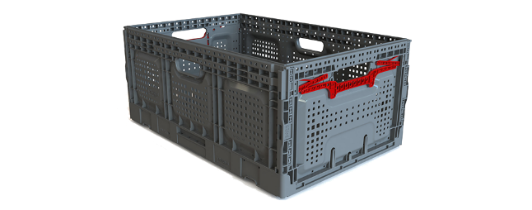
They are detachable, stackable and very versatile. They can be folded, taking up less storage space. They save 85% in return transport and storage. There is the possibility of providing the box with a lock, securing the goods. Manufactured in polyethylene and polypropylene. They are suitable for food use and are available in different sizes and types.

Foldable plastic box-FlexiCrate ©
Returnable packaging- Plastic
Reusable Packaging - Plastic packaging
Returnable packaging - Plastic Packaging
  • Removable and reusable plastic packaging.

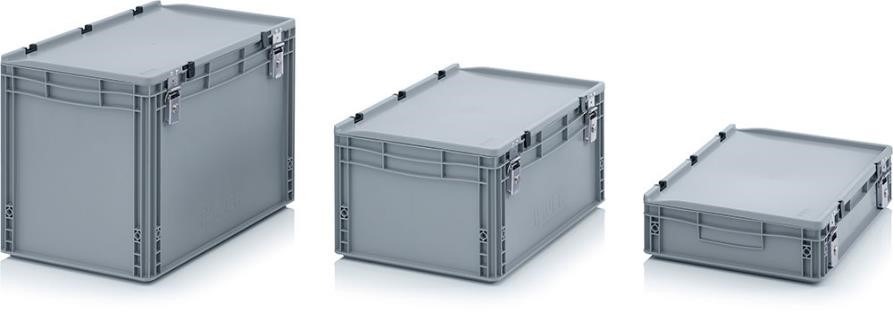
This type of plastic packaging is characterized by its strength, low weight, reusability and re-stackability. They are available in several standard sizes that cover most of the needs of the packaging sector.

Plastic collapsible crate – Container storage box
Returnable Packaging -Plastic Packaging

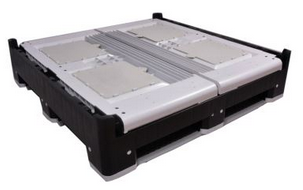
Manufactured to support medium and heavy loads, plastic pallets are lightweight, durable and reusable. They are available in a range of standard sizes.

Returnable Packaging_plastic packages
  • Lego pallet/paletkit.

It is a modular plastic pallet that can be disassembled for its return. The parts that deteriorate over time can be easily replaced.  In addition, it is dimensional according to your needs. Being modular, it can be assembled as long as required and benefit from a logistical return.


  • Woodyplast collars.

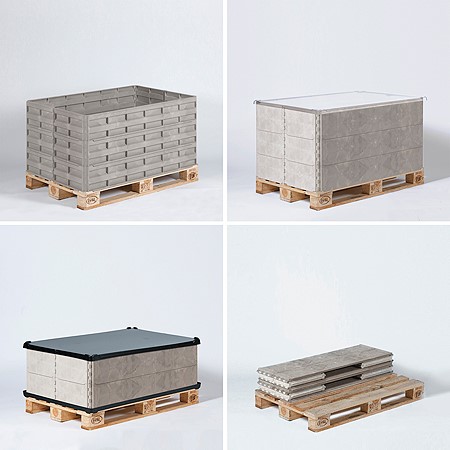
These collars are manufactured with a combination of materials: 70% wood (spruce) and 30% plastic (PP + additives). This mixture is then thermoplastically processed into granules and WPC is obtained. They are highly resistant to moisture and are 100% recyclable. They are available in standard sizes.

Returnable Packaging_plastic packages

In short, there are different plastic returnable packaging that can be an efficient and cost-effective alternative to your conventional packaging system.


Contact 360 Eco Packaging. We will help you find the right solution for your logistics processes.

Loading

Presenting our Sustainable Packaging at Intersolar Europe

Presenting our Sustainable Packaging at Intersolar Europe

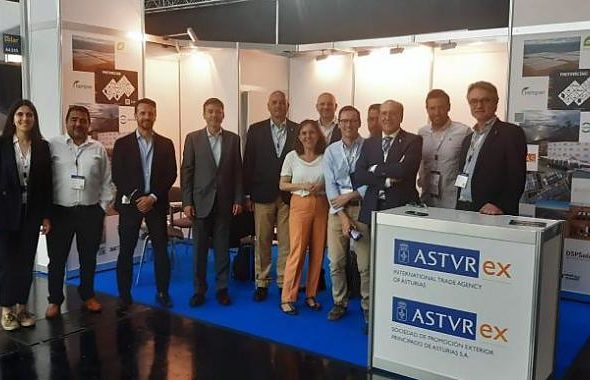
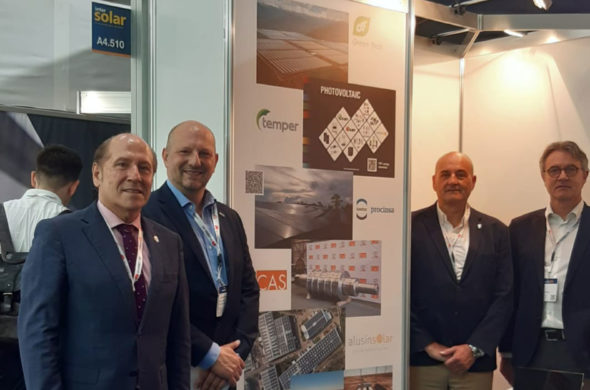
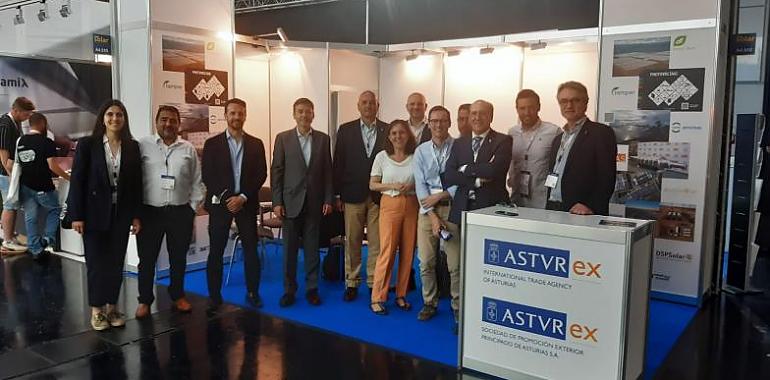
On May 11, 12 and 13, 360 Eco Packaging Encaja Embalajes had the opportunity to present its packaging solutions for the solar industry at the Intersolar Europe Fair, the most important exhibition of the sector worldwide, held in Munich (Germany).

The meeting was attended by Jesús Álvarez, commercial director, and José Ramón Novoa (ASTUREX; Sociedad de Promoción Exterior Principado de Asturias S.A.)

Our participation was possible thanks to the Sociedad de Promoción Exterior Principado de Asturias S.A. (ASTUREX), which organized a joint stand with 8 Asturian companies that supply products and services related to the solar energy value chain.

With commercial actions such as Intersolar Europe, ASTUREX contributes to a greater presence of Asturian companies in international markets.

On this occasion, among all the participating companies, we have highlighted the potential of the region as a producer of goods and services in the value chain of renewable energies linked to solar energy.

We were accompanied by: Alusín Solar S.L.U., Distribuciones Solares del Principado S.L. (DSP Solar), Duro Felguera S.A., Ingeniería y Suministros Asturias S.A., Mecanizados CAS S.A., Procinsa Energías Renovables S.L. and Temper Energy International S.L. (Temper).


As part of the fair, 360 Eco Packaging – Encaja Embalajes informed attendees about the most efficient packaging for transporting solar panels, sustainable packaging and the reusability of wooden packaging and its impact on logistics costs, as well as the specifications that this type of packaging must meet for export.


Why Intersolar Europe?

Intersolar Europe is one of the most significant events in the energy sector calendar.

The event brings together more than 50,000 visitors and around 1,500 exhibitors interested in showcasing their innovative products, solutions and business models for the energy transition and security of supply in Europe.


The importance of Sustainable Packaging at Intersolar Europe

As industrial packaging manufacturers, we remain attentive to market demands in order to offer solutions that meet the needs of the supply chains of each sector and customer. 

It has been an honour for us to present our Sustainable Packaging at Intersolar Europe.

See you at the next edition!

Presenting our sustainable packaging at Intersolar Europe

Presenting our sustainable packaging at Intersolar Europe

Loading

Circular Packaging for a New Cycle

It is a fact that the intensive use of natural resources and the volume of waste we generate have a huge environmental impact. It is also a fact that through a Circular Economy we can transform our throwaway model into a new, more balanced and respectful production system, able to provide value thanks to continuous and regenerative cycles.

At 360 Eco Packaging we are contributing to a sustainable economic model.

Our company has spent years helping companies in a wide variety of sectors to be more productive and reduce their environmental footprint through efficient, sustainable and profitable packaging systems.

And we do this from a circular perspective based on three principles:

  • Reduce and valorize our resources.

Our raw materials come from certified sustainable sources, as well as from our own manufacturing surpluses. We also apply circular designs to our packaging solutions, based on technical, economic and ecological feasibility diagnoses.

  • Extending the useful life of our products.

We manufacture returnable packaging that can be reused and recycled by companies, allowing them to save costs, produce less waste and optimize their logistics processes.

  • Identify opportunities for improvement in the supply chain of our customers.

We provide an advisory service and optimization of packaging processes, creating circular packaging solutions for every need.

With this work philosophy we have developed patents in returnable packaging, such as our Clipping Crate® and obtained certifications in ISO9001, PEFC/FSC chain of custody and ISPM15 (phytosanitary regulations for export), among others.

We also participate as a member of the Subcommittee CTN 192 SC 03 (UNE/ISO) in the development of a new regulation in the field of transport of dangerous goods, together with AENOR and the Ministry of Industry. We also belong to the board of directors of the Innovation Club in Asturias and collaborate in the development of new projects with leading technology centers and companies such as AIDIMME and Aglae.


For our company, being sustainable has become a competitive advantage.

For this reason, we want to share our knowledge and experience with companies and professionals who are still unaware of the benefits of the circular economy or are wondering how to implement a circular strategy in their packaging systems.

We want this blog to serve as a meeting point where we can provide resources on trends, regulations, programs and success stories that facilitate the practical application of a circular economy.

The future will be circular. And as in every cycle, there is always a starting point.

We hope that each post will be a source of inspiration that helps to see packaging in a different way.


Loading

Main Types Of Cardboard

Cardboard is a material formed by the superposition of paper, which gives it greater strength and hardness than paper. It is one of the most widely used elements in the packaging sector, both in the construction of boxes and in the design of molds that fit inside them to hold goods.

Declaration of intentions

360 Eco Packaging emerged as a logical evolution and adaptation of a traditional family company, founded in 1939. Due to these experience and constant evolution, we have learned to adapt to the needs of the sector. Identifying and developing the most efficient packaging systems.

Therefore, we can offer the customer a 360 degree service.


For all these reasons, this blog was born with a two-way character and with the real purpose of being a meeting place, where different profiles can find and debate about the multiple types of packaging that the market offers us.

We will analyse from the regulations required for the different types of packaging and transport, to the new technologies and materials that are currently being developed.

With this we will try to put on the table as much information as possible, so that we can clearly define and select the best solution to the different needs that may arise in the world of logistics and transport.

In the next post we will study a litle introduction to ISPM 15.

Loading

X