Tag Archives: cargo protection

Securing loads with Airbags

When determining the right packaging, many aspects must be taken into account. One of them is the fixation and adjustment of loads. For this purpose, multiple systems and pneumatic elements are used to ensure that our shipment arrives in optimal conditions.

One of the most commonly used are dunnage bags or airbags for packaging.
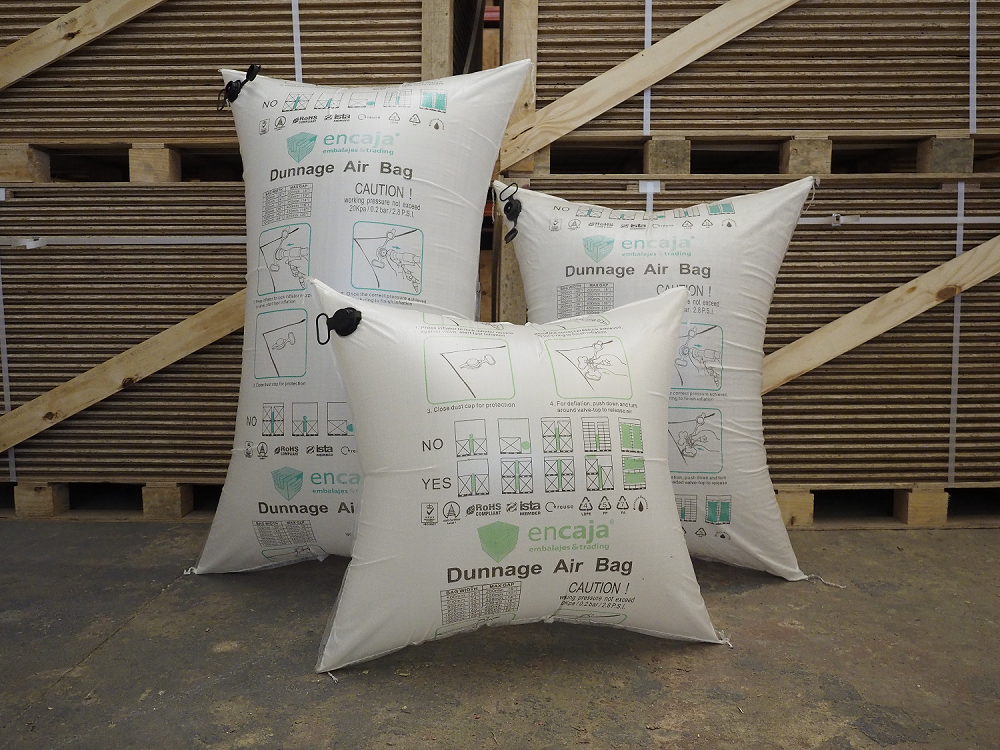
Securing loads with Airbags

What are packaging airbags?

Packaging airbags, dunnage bags or inflatable bags are used to protect goods during transport. Their function is to fill the empty spaces between the cargo or between the cargo and the walls of the transport unit, keeping it immobile in order to reduce the possibility of damage during transport.

These bags are very easy to use. They are filled with air through a valve to the required pressure. Airbags are available in different sizes, depending on the use and load.

Securing loads with Airbags

Which airbag do I need to protect my cargo?

Airbags can be used in land, sea or rail transport. To know what type of airbag we will need, the first thing we must know is the volume and weight of the cargo to be transported (to define the working pressure of the airbag), as well as the operating time of this airbag. Once these parameters have been set, we will check the manufacturer’s technical data sheet to see if it adapts to our needs.

Most manufacturers comply with the AAR Bulletin No. 9 (Association of American Railroads), the most widespread international standard, which classifies these pneumatic elements into 5 levels, according to the type of transport and the operating pressure.

Securing loads with Airbags

As shown in the table, the different types of transport are classified according to the working pressure. This is because this standard contemplates pressure tests after 19 days, allowing a load loss of no more than 1psi. In other words, for long transports we must generally use level 2 airbags or higher (more working pressure).

Once we have defined the type of air bag we need, we will have to design a system of loads as homogeneous as possible, using these elements to adjust the loads.

To do this, we can take into account the guidelines of the CTU 2014 code, which, among other issues, details the different misuses that can occur when applying this system.
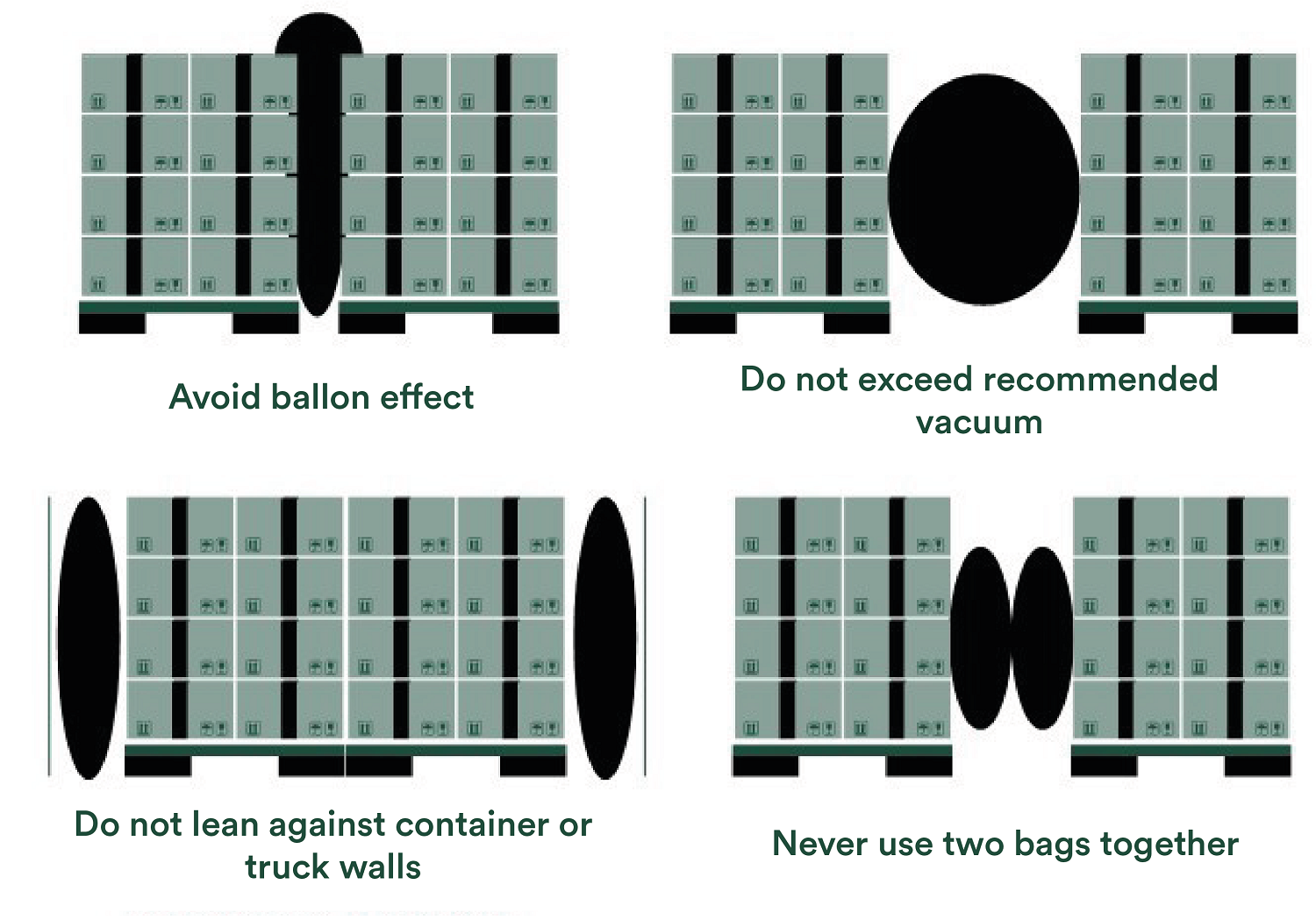
Securing loads with Airbags

Types of airbags and characteristics

They can be made of different materials, depending on their resistance to external agents in case of possible rupture.

There are basically two types, depending on the material they are made of:

  • Raffia:

These are bags or sacks consisting of an inner layer of polyethylene and a top layer of raffia, a type of elastic fabric widely used for packaging due to its resistance.

  • Kraft paper:

They have an inner layer of polyethylene and a top layer of Kraft paper reinforced with polypropylene to prevent tearing.

In both cases, they are durable, reusable and waterproof, providing an efficient solution to protect cargo during transportation.


If you need advice, consult a reliable supplier to help you choose the best option.

Loading

What is Just in Time logistics?

The world is constantly evolving. The changes that are taking place have an impact on supply chains. Industrial packaging manufacturers have to respond to the challenges posed by different logistical operations, however complex they may be, in times of greater or lesser uncertainty.

One of them is Just In Time manufacturing, which orients production to demand.

What is the Just in Time method?

The Just in Time production method is based on real orders. It consists of producing the exact amount of what is required, in the right place at the right time, without wasting system resources.

Just in Time logistics

Its origin comes from Japan. In the mid-twentieth century, large Japanese companies were looking for more efficient production systems, which in turn would allow them to reduce factory inventory. Toyota was the first company to apply the Just in Time method, under the name of Toyota Production System, in automobile manufacturing plants, with the aim of eliminating from the production process those elements that did not provide real value.

Since then, automotive companies, technology companies, fast food chains around the world and today, e-commerce companies use this model to make their processes more efficient, optimize costs and respond better and faster to customers.

Just in Time logistics

What are the advantages and disadvantages of the Just in Time method in logistics?

  • Zero defects: an error can cause delays and increase stocks.
  • Zero breakdowns: this implies scheduled maintenance of work tools.
  • Zero stocks: this generates storage and space costs.
  • Zero lead times: reducing production cycles reduces waiting times, equipment preparation and transit times.
  • Zero paperwork: reducing bureaucracy to a minimum.

Applying this method provides better management, greater flexibility and savings, but requires millimetric coordination in all the links that make up the supply chain.

Just in Time logistics

Advantages of JIT

  • Reduces inventory levels and costs associated with purchasing and warehousing, since only what is in demand is manufactured.
  • Minimizes losses, obsolete products, expired products or products that lose value when stored, by having a minimum stock.
  • Reduces time and unnecessary trips to locate the merchandise.
  • It favors a closer relationship with suppliers.


Disadvantages of JIT

  • Possible delays and lack of supplies.
  • Less access to special prices for small-scale purchases.
  • Increased costs when changing suppliers.
  • Scarce capacity to react to demand peaks.
Just in Time logistics

Packaging for Just in Time logistics

As with all other supplies, packaging in JIT operations must be available when it is needed. Companies specializing in this type of packaging must be able to offer packaging solutions that help simplify operations and speed up delivery times, that are easy to handle and help reduce storage costs.

This logistics requires ergonomic packaging, which allows assembly/disassembly in a very simple and safe way, folding solutions, which facilitate internal movements and save space, as well as customized packaging, which optimizes the logistics process to the maximum.


Contact us. At 360 Eco Packaging we can help you find the best packaging or storage solution for your Just in Time operations.

Loading

7 milestones in the history of packaging

Since ancient times man has had the need to protect his belongings, hence the following post on the history of packaging and its evolution.

Over the years the evolution of the history of packaging has been parallel to the economic and social development of the time. As manufacturers of industrial packaging, these are for us the 7 most important milestones in the history of packaging.

1. From clay to wood for transporting wine

In ancient Rome, large clay containers were already used to store and transport wine. The clay amphorae and jars were airtight and protected the wine from oxidation. Upon conquering French lands, the Roman Empire discovered the wooden barrel; an easy-to-handle container, lighter and more consistent than clay for transporting wine from Greece, Gaul and Hispania.

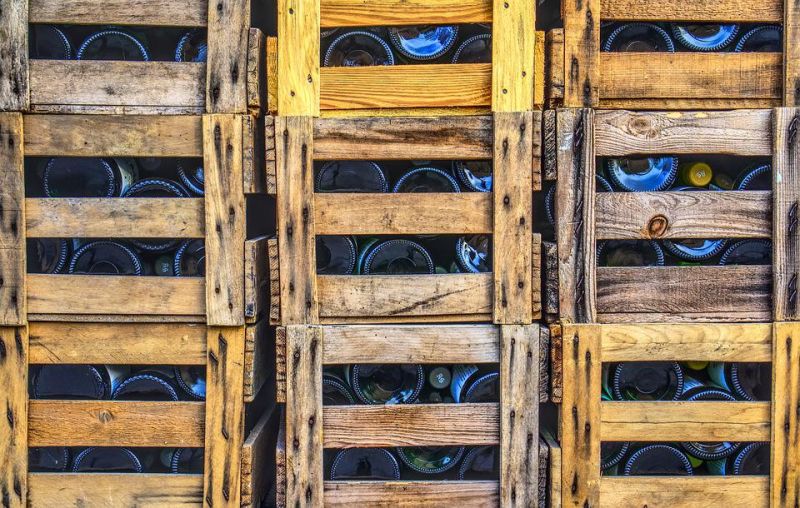
This was the way it was done for centuries until glass arrived. In the 17th century the use of the bottle became widespread. However, wood continued to be a highly valued packaging in the logistics of the wine sector.

7 milestones in the history of packaging

 2. The emergence of corrugated cardboard

The Chinese are considered to be the first to use corrugated cardboard in the 16th century. However, it was the pleats of Victorian fashion in the mid-19th century that led to the development of corrugated cardboard.

In 1856 Healy and Allen patented in England the use of pleated paper as an inner reinforcement for stiff top hats. Years later, the American pharmacist A. Jones came up with the idea of wrapping fries in corrugated cardboard. Jones came up with the idea of wrapping perfume bottles in corrugated paper to protect them from knocks.

In 1874, Oliver Long improved Jones’ patent by adhering the corrugated paper to a flat sheet of paper and then to two flat sheets of paper. Liners were born, the structure of corrugated cardboard that provides the compression and strength of the cardboard boxes we use today.

In 1890 Robert Gair invented the corrugated box and the American Thompson and Norris Co. began manufacturing the first boxes.

Today the cardboard box is the preferred packaging for ecommerce due to its lightness, strength and low cost.

Corrugated cardboard

3. The arrival of the europallet

It was not until World War II that the use of pallets became popular for moving military equipment. Until then, wooden crates, skids or barrels were used to move the goods.

At the end of the war, the first American pallet patents were registered. However, train wagons in Europe had dimensions in which they did not fit well, so it was necessary to reduce them and regulate their manufacture so that they all had the same dimensions and could make better use of space. In the 60’s the Euro pallet was born.

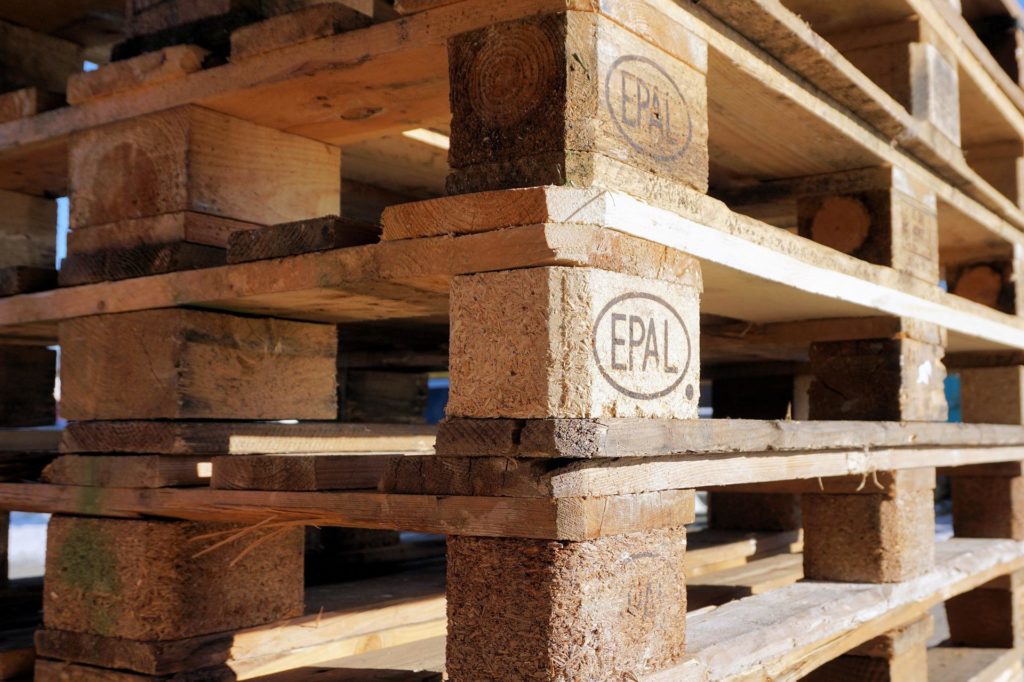
Since 1991 the European Pallet Association (EPAL) issues licenses to manufacturers and under the EPAL seal certifies the quality of the pallet and identifies reliable suppliers.

European Pallets EPAL

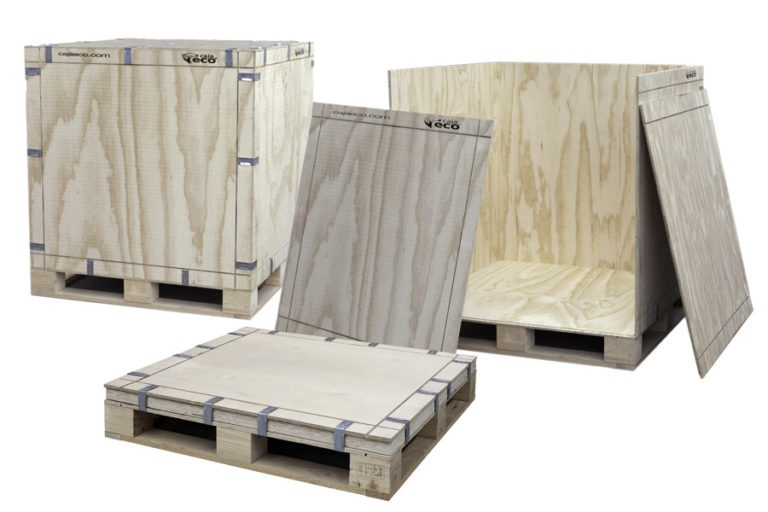
4. The collapsible wooden box, a step towards packaging engineering

During World War II, the Allied side had to make a great logistical effort to get weapons, equipment and medical supplies by ship and plane to the places in conflict. One of the biggest challenges was shipping war vehicles.

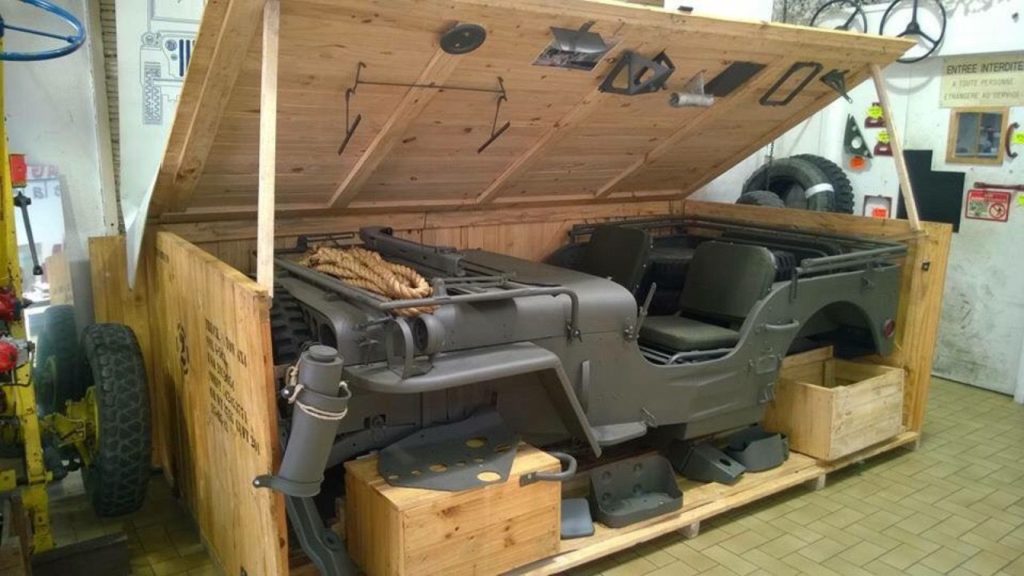
The Jeep automobile company had designed the “Willys,” an agile and rugged all-terrain vehicle, the forerunner of the 4×4 we know today. For domestic shipments, vehicles were stacked on top of each other on pallets. But shipping them across the ocean required special packaging. And an innovative solution was found: the disassemblable wooden crate.

The “Willys” was stored in pieces and once at destination the crate was disassembled, allowing access to the vehicle and assembly in a matter of minutes.

Today, packaging engineering continues to successfully meet the challenges of the automotive sector.

7 milestones in the history of packaging

5. The expansion of plastic

The origin of plastic is related to the game of billiards. An American company decided to award 10,000 dollars to whoever could create a material to replace ivory, which was scarce at the time, to manufacture billiard balls. In 1870, the Hyatt brothers chemically modified cellulose to produce celluloid, winning the contest and obtaining the first plastic in history.

In 1907, Baekeland invented Bakelite, the first fully synthetic commercial plastic, described as thermosetting, insulating and resistant to water, acids and moderate heat. In the following decades, new plastics derived from the processing of fossil fuels, such as polyethylene or polyvinyl chloride (PVC), were investigated.

At present, the applications of plastic are infinite, and it is a very common material in the manufacture of returnable containers and packaging for industrial use.

Plastic collapsible crate

6. The box that revolutionized the transport of goods: the sea container.

Since they made the first transatlantic crossing in the mid-twentieth century, sea containers have revolutionized the transport of goods. Before their appearance, ships were loaded manually, which meant long waits in port.

The businessman Malcolm McClean came up with a system whereby cargo could be stacked inside a large metal box and transported by ship or truck. Thus was born the container, which made its first trip in 1956, from New Jersey to Houston.

A decade after its first trip, the ISO (International Standard Organization) developed standards for its international use. Containerization led to a reduction in the cost and time of freight transport, giving way to intermodality.

7 milestones in the history of packaging

7. Ecopackaging and sustainable packaging

In the mid-twentieth century the packaging industry began its development and today continues to evolve.

With self-service, marketing, the computer and the internet, packaging began to spread, becoming a competitive advantage for companies and a lure for the consumer.


Foldable wooden crate

Today, the Circular Economy model and the preferences of an increasingly eco-conscious consumer force the industry to look for sustainable packaging solutions, designed from the source to reduce the use of resources and revalue their waste, without forgetting their original purpose: to protect the goods.

Loading

How to Retract a Merchandise

The shrink wrapping of goods is a process used to secure and protect products during transport or prolonged storage.

This type of plastic creates a protective film capable of protecting items against adverse atmospheric conditions (UV rays, rain, wind…).


Materials needed for shrink wrapping

Below, we provide you with the necessary materials to shrink wrap effectively:

Cargo Shrink Wrap. How to Retract a Merchandise

Steps to follow to shrink-wrap goods


Prepare the load: the first step is to place the products in an organized way, making sure that they are well secured and that they do not move.

Cut the shrink wrap: next, cut the necessary amount of shrink wrap to completely cover the load. It is important that the shrink wrap is long enough to seal the bottom of the pallet.

Place the shrink wrap over the load: once the shrink wrap is cut, unfold it over the load and check that it is completely covered. If it is not well covered, adjust its position.

Seal the plastic at the bottom: with the help of the clamp, seal the plastic to the bottom of the load, so that it is taut and tight, to avoid wrinkles or air pockets.

Apply heat: in this step, repeat the same process as in the previous procedure, but this time it is done on the load. Again, it is important to avoid possible wrinkles or air pockets.

Finish shrink-wrapping: the last step is to check that there are no gaps or goods exposed to the elements. In case of an error, this piece should be covered with more plastic or with specific adhesive tape.

Cargo Shrink Wrap. How to Retract a Merchandise

By following these steps, you can confidently and effectively shrink-wrap your merchandise, ensuring its protection and security during transportation or storage.

Shrink-wrapping offers many benefits, such as safeguarding against dust, moisture, and tampering, while also providing a professional and presentable appearance. Remember to carefully select the appropriate shrink plastic and ensure a tight seal using a Shrink-Wrap Gun. With these techniques, you can retract your merchandise with ease and peace of mind.

Whether you’re a business owner looking to streamline your packaging process or an individual seeking to protect valuable items, mastering the art of shrink-wrapping is a valuable skill. With practice and attention to detail, you can ensure that your merchandise arrives in its intended condition, impressing customers and preserving the quality of your products.

So, embrace the advantages of shrink-wrapping and confidently package your merchandise with the knowledge and skills gained from this guide. Efficiently securing your goods will not only save you time and money but also enhance the overall customer experience.

Loading

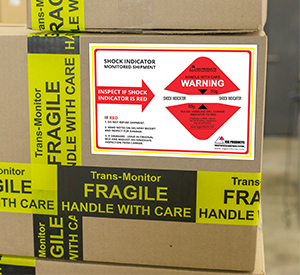
Mechanical Impact Detectors

There are two types of impact detectors: mechanical and electronic.

This time we will focus on mechanical devices, they are the most used and the most affordable due to their simple architecture. They are capable of detecting impacts on one or more axes and there are tared models with different g-force sensitivities.

Mechanical Impact Detectors

Therefore, we can classify these detectors as:


One-dimensional

Mechanical detectors that capture accelerations in only one axis (one direction and two directions).

These detectors are the most commonly used, there are sticker type (with adhesive) that are easily anchored to the packaging to be controlled.

Mechanical Impact Detectors

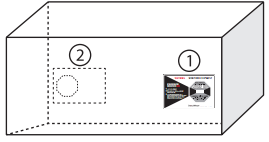
Their placement is generally:

  1. For a box with a side-to-side proportionality of approximately 1:1
Mechanical Impact Detectors

2. For a box with approximate side-to-side ratio > 2:1

Mechanical Impact Detectors

3. The heights “h” at which the indicator should be positioned may vary depending on the load, the g-force and the manufacturer.

Most of these indicators are activated by changing color (red) when the maximum set acceleration has been exceeded, it does not show a history of events, for that an electronic detector would be necessary.


Two-dimensional


Mechanical detectors that capture accelerations in two axes (two directions with their two senses).

These detectors are capable of detecting impacts in two directions and even show the direction, sense and modulus of the maximum force to which the load was subjected as shown in the above simulation (provided it is within the operating range of the detector).

Mechanical Impact Detectors

Their placement is generally done by means of four screws (per detector) and unlike the one-dimensional ones, their location in the case does not generally interfere in the operation.

There are two main types: magnetic and combined sphere-spring system.

Both are two-dimensional and allow the working accelerations g to be adjusted (depending on their type of construction).

Loading

Cardboard, a strategic packaging for the Circular Economy

In a Circular Economy model where waste becomes a resource, the paper and board industry has a key role to play.


We know that the future of packaging involves incorporating sustainable materials, reducing the ecological footprint associated with its production and use, and that its waste can be revalued, without neglecting the purpose for which it is designed: to protect the product. In this future, cartonboard packaging will be a priority.


Cardboard as a sustainable packaging material


Cardboard is a natural, renewable, recyclable and biodegradable material. In recent years, it has been replacing other traditional packaging materials such as plastic.

Cardboard, a strategic packaging for the Circular Economy

Paper and cardboard fibers are also much stronger than previously thought. It has been shown that fiber-based packaging material – paper, cardboard, paperboard and folding cartons – can be recycled more than 25 times, retaining their mechanical properties for re-integration into the production process.

This makes it one of the most sustainable materials in the packaging sector and one of the preferred packaging solutions for the consumer.

Cardboard, a strategic packaging for the Circular Economy

Why is cardboard packaging preferred by consumers?


The way companies package their products is a matter of concern for consumers, influencing their purchasing decisions.

The European Association of Carton and Cartonboard Manufacturers reveals that 4 out of 5 consumers prefer cartons to plastic. In its report, it says that more than half of the consumers surveyed in Spain claim to have switched brands because the packaging was not recyclable or because they used unnecessary packaging. It adds that 82 percent would be willing to pay more for environmentally friendly packaging.

Cardboard, a strategic packaging for the Circular Economy

Most commonly used carton packaging

For companies interested in incorporating circularity into their packaging, cardboard packaging represents a zero-waste system of significant social, economic and environmental value.

Because of its versatility, it can be used throughout the packaging chain:

  1. Primary packaging, which is directly in contact with the product.

  2. Packaging for Ecommerce.

  3. Cargo units for storage and transport of consumer goods.

  4. Protective elements, such as interior fillers to pack merchandise shipments, or corners to avoid friction during transport.

The most commonly used cartons are:

Corrugated cardboard boxes

Can be used in standard size or large volume for packing and palletizing light and heavy goods. They are foldable, which facilitates storage, reducing space.


Pallet boxes

They are corrugated cardboard boxes placed on a wooden pallet or cardboard. Its use as commercial exhibitors has been extended by its profitability, since they serve both as product container shelf and advertising support, because the cardboard can be easily printed and incorporate gaps or shelves to place the product.


The cardboard pallet

Consists of corrugated cardboard sheets and solid cardboard blocks that are inserted as pillars. Resistant and lighter than the wooden pallet, it is also valid for international transport, without having to undergo phytosanitary treatment.


The road map to a Circular Economy is written on cardboard.


Contact us if you are interested in adding reusable packaging to your logistics.

Loading

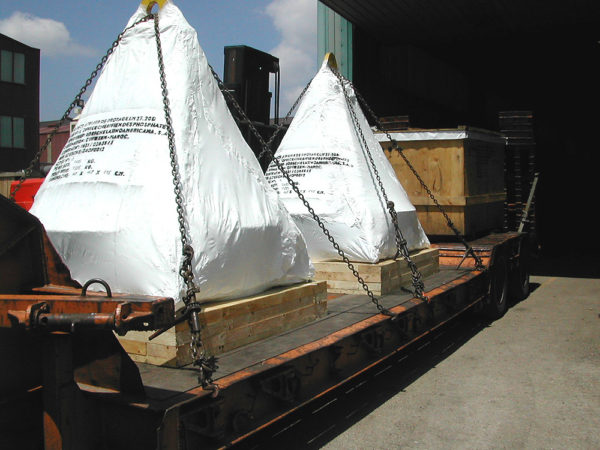
Aluminium Foil Barrier

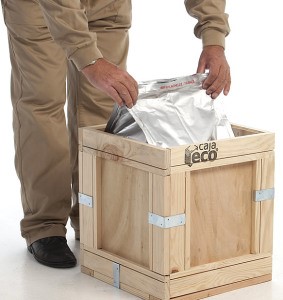
The Heat-Sealable bag, Insulating bag or Aluminium Foil barrier material is a widely used element in packaging to prevent corrosion, especially when it comes to metal packaging and electronic items.

Aluminium Foil Barrier

It is used in conjunction with desiccant salts precisely to prevent moisture from oxidizing the metal on long ship voyages, but is also used for long-term protection of machinery and other products, for example, for storage if long-term storage is planned.


COMPOSITION

This material is mainly composed of aluminum and polyethylene. Depending on the manufacturer, the proportion of each material and even the type of plastic used may vary. For example, sometimes polyester, PET plastic or polypropylene are added. As for polyethylene, it can be of high or low density.

Some barrier materials have more plastic than aluminum or vice versa. The quality and correct protection of the product will depend to a large extent on the total thickness of the barrier film from which the bags are made and how many grams it weighs per square meter, as well as the proportion of aluminum it contains. The more aluminum the material contains to the detriment of plastic, the lower the vapor transmission inside the container.

This material is waterproof and resistant to external factors such as ultraviolet rays.


PRESENTATION

Generally we can find this material in rolls whose measures can vary according to the customer’s needs, although it is also common to find manufacturers and companies that sell ready-made bags with the measures that the customer deems appropriate.

Aluminium Foil Barrier

The aluminium foil barrier bag can also be vacuum sealed if desired, with the help of special machines that absorb oxygen from inside the bag. In this way, the product is better protected against oxidation.

There are several ways of sealing this bag. As its name suggests, the most common way is with heat, although we can also opt for plastic closures that seal the container.

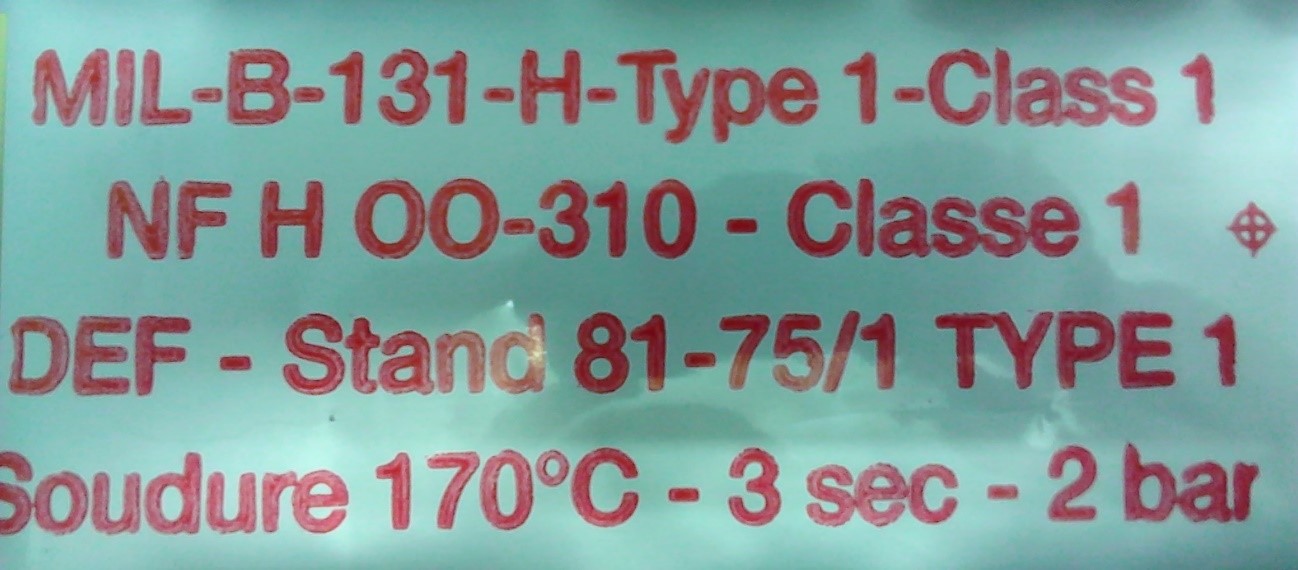
This material can also be printed, so it is common for a company to print its own corporate logo, as well as the specifications of the material and the temperature to which it must be subjected for sealing.

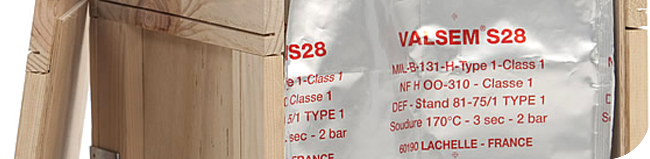
This material must be manufactured in compliance with DIN 55531-1, which is the German and European standard in general.


Other world standards equivalent to this norm that can be found are the following:

  • USA: MIL-B-131.
  • France: NF H 00310.
  • Germany (military classification): TL 8135-0003.
  • United Kingdom (military classification): DEF STAN 81-75/1.
Aluminium Foil Barrier

To conclude, it is convenient to point out the main difference between aluminum barrier material and other plastic materials that we will see later, such as shrink film or VCI. For long boat trips, adverse weather conditions or long storage periods, aluminum is the most convenient option for the correct protection of the product against plastic compounds, since it is much more resistant.

Loading

Case study, Use of Desiccant Salts

In the previous post we have seen what a DIN unit is and the degree of absorption per unit, therefore we must remember that a DIN unit is equivalent to an absorption of 6g of water and that to absorb these 6g of water approximately 30g of desiccant salts are necessary (depending on the type of salt and the conditions).

Desiccant Salts

Having recalled the previous post, we consider a practical case for a part of dimensions 1150x750x750mm (length x width x height) to be transported in a box equipped with a thermoweldable bag of inner dimensions 1200x800x800mm.


To calculate the volume of air enclosed between the box and the part we must find the differential of volumes, therefore:


1,2 x 0,8 x 0,8 – 1,15 x 0,75 x 0,75  = 0,121 m3


Once this data has been calculated, we go to the formula:


n = 1/a · ( V · b + m · c + A · e · D · t )

And we calculate the number “n” of DIN units replacing each constant by its value, (to know the value of these parameters do not hesitate to visit our previous post).

The result would be n = 2 approximately, so about 60g of desiccant compound would be necessary for this packaging. We must bear in mind that it is always better to distribute these salts proportionally so that the atmosphere always maintains homogeneous humidity levels, so whenever possible we will use several bags distributed homogeneously.

Desiccant Salts

As we have mentioned in previous posts, it is important to define the volume of air that we want to maintain with low humidity levels in order to calculate the number of DIN units that will be necessary. Once we know this information, our supplier will tell us the exact grams of salt that we will need depending on its composition.

Loading

Desiccant salts, absorption capacity and normalization

Dehydrating or Desiccant salts, they are used more and more frequently for the packaging of cargoes, especially in maritime transports, but … are we using the right amount of desiccant salts? what is a DIN unit? do all desiccant salts absorb the same amount of moisture? In this post we will try to answer all these questions.

Dessicant Salts

To calculate the amount of DIN units of salts needed to ensure a “dry” environment, we will base ourselves on the DIN 55474 standard, which empirically defined as:


n = 1/a · ( V · b + m · c + A · e · D · t )

Where “n” is the number of DIN units, “a” the amount of water vapor absorbed per unit of salt, for 20 % RH a = 3 g; 40 % RH a = 6 g; 60 % RH a = 8 g, “V” the volume inside the packaging, “b” the humidity per unit volume of interior air, “m” weight in kilograms, “c” grams of humidity per kilogram of weight, “S” packaging surface in square meters, “e” correction factor, for 20 % RH e = 0.9, for 40 % RH e = 0.7 and finally for 60 % RH e = 0.6, “D” permeability in grams per square meter and finally “t” the storage time.

To summarize, in general, one DIN unit is equivalent to an absorption of 6g of water, to absorb these 6g of water approximately 30g of desiccant salts are necessary (depending on the type of salt and the conditions).


Thus we can take this table as a reference:

Desiccant salts

As we have already mentioned in this blog, there are many types of desiccant salts depending on their chemical composition, so we must always know their absorption capacity and the amount of DIN units per unit mass.

Dessicant Salts

As a conclusion we must assume to take as reference the DIN units and from this we will be able to calculate the grams of each salt that we need. Starting from these DIN units we will never make a mistake with the amount of salts needed.

Loading

Desiccant Salts

Desiccant salts, also called dehydrating salts, are chemical compounds that absorb moisture and water in very different ratios, depending on the amount of desiccants and their chemical composition, and can regenerate if subjected to a temperature above 150ºC.

There are different types of desiccant, the most common are:


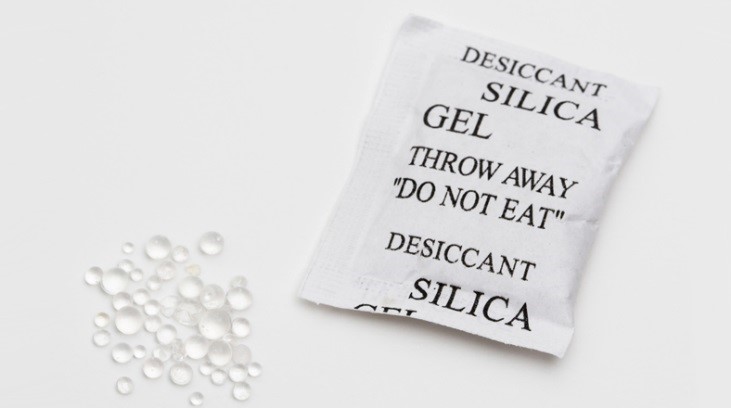
  • Silica gel

These are small solid pellets of silicon dioxide obtained from sodium silicate. Despite being a chemical compound, it is not toxic or flammable by itself, although one of its components is highly toxic to humans if ingested or in contact with it for a long time, as it could cause silicosis. This is cobalt chloride, which is used to determine the amount of moisture in the gel. In this way, it causes the gel to change color when wet, varying from blue (dry) to pink.

Desiccant Salts
  • Bentonite

Is a very fine-grained (colloidal) clay of the montmorillonite type containing bases and iron. The name derives from a deposit found at Fort Benton, USA. The particle size is less than 0.03% of the average grain size of kaolinite.

Desiccant Salts
  • Calcium chloride

In addition to its use in pharmaceuticals and food, this compound is used as a desiccant, given its moisture-absorbing qualities. It is less common than silica gel, although it does not contain toxic elements and has a higher degree of moisture absorption. The problem is that it is not advisable to use it in spaces that are not hermetically sealed, since it runs the risk of liquefying, with the consequent elimination of its absorption capacity.
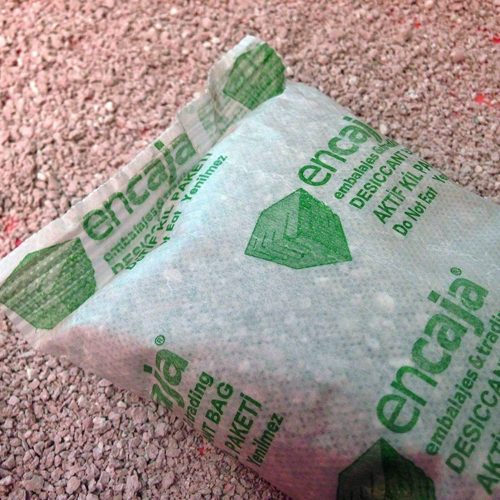
Desiccant Salts

Measures


There are four different units for measuring desiccants. The most commonly used due to their standardization are grams, but we also find NFH, DIN units and MIL units.

These would be the equivalences between them, taking as a reference the most used measurements:

Equivalency table

We recommend the use of one half kilo bag (16 DIN units) of desiccant or dehydrating salts per cubic meter. As a guideline, we can indicate that for a 20 feet container it is advisable to use 20 bags of 1 kg. These data are estimates since, depending on the cargo to be transported (sensitivity to oxidation and/or corrosion mainly), the proportion of salts should be adjusted to maintain the relative humidity at the established rates.


Packaging


The desiccant can be purchased in bulk or packaged in breathable bags for use in containers or inside packaging.

The bags are made of non-woven textile so that moisture passes through them and can be picked up by the compound. Now, certain desiccant manufacturers have begun using another material called Tyvek, which is used primarily in home and building construction to prevent moisture.

This material is made of high-density polyethylene and nonwoven olefin fiber, so it is highly breathable and its uses are very diverse. Although it looks like paper, we must not forget that it is plastic when it comes to recycling.

As we mentioned at the beginning of this section, desiccant bags are frequently used in containers for shipping goods by sea.

Salt compounds and moisture can cause damage to the goods. For this reason, many containers come with special cables or rings for the placement of desiccants.

In this case, a hook or hooks, usually made of plastic or metal, are added to the bags to attach them to the walls of the container. If the container has no means of hanging the bag, many manufacturers incorporate a special adhesive to attach the bag directly to the inner side walls.


Other remarks


There is a chemical compound called dimethyl fumarate, DMF, which is also used as a desiccant.

Years ago the Finnish doctor Tapio Rantanen discovered that it can cause severe allergic reactions and large skin eczema, even in very small proportions, after the marketing of this product in sofas by a Chinese company, with the aim of preventing the furniture from deteriorating with humidity, resulting in several cases of affected people in several countries around the world, including Spain.

For this reason it is very important to make sure that the desiccant that we are going to use is free of this substance and that it has passed the pertinent controls that indicate it.

It is also common to find in the desiccant packages cards indicating the moisture content of the salts, thus warning if it is necessary to replace the package in case they no longer absorb water vapor.

Indicator cards

These cards work by changing color, in such a way that when their blue color disappears and turns to a light pink, as in the case of silica gel, it means that the desiccant salts have already exhausted their absorption capacity.


In conclusion, you will have to choose the type of desiccant that you believe convenient and in the right measure depending on the volume of the load and how it is packed. It is always advisable to use it, since humidity is present everywhere and in certain regions and countries more than in others, but above all it is an indispensable requirement for sea and river transport, combining it with other types of materials for adequate protection.

Loading

X